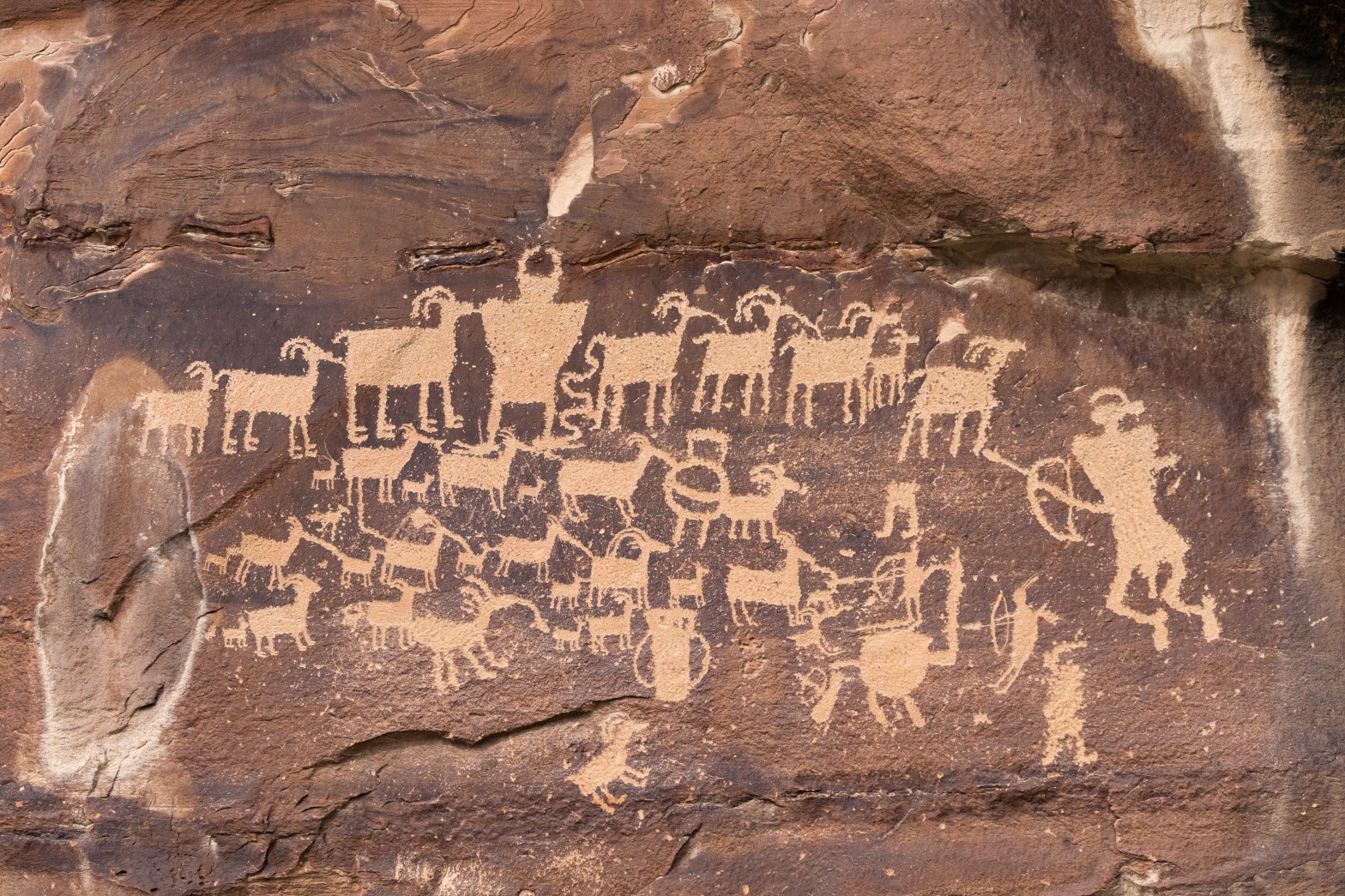
Deep within the Book Cliffs of North-Central Utah stretches what, known to few, is colloquially called The World’s Longest Art Gallery. Nine Mile Canyon, in reality winding about 46 miles, is host to a massive display of art, structures, and artifacts left behind by an ancient native people: The Fremont Culture. Living mostly in what is now the US state of Utah, the Fremont people inhabited these desert lands between 300 and 1300 CE. A foraging, farming, and hunting community, these people endured harsh environments at first, but changing climates brought more favorable conditions allowing the culture to peak for 400 years from around 900 to 1250 CE. Farming corn, foraging food, and especially hunting local animals, the people not only survived, but thrived, developing intricate culture left behind in the form of large structures, numerous artifacts such as pottery and baskets recovered from their settlements, and massive art projects along the canyon walls in which they lived. These art projects depict their daily lives, religion and culture, and most importantly, who they were as a people.
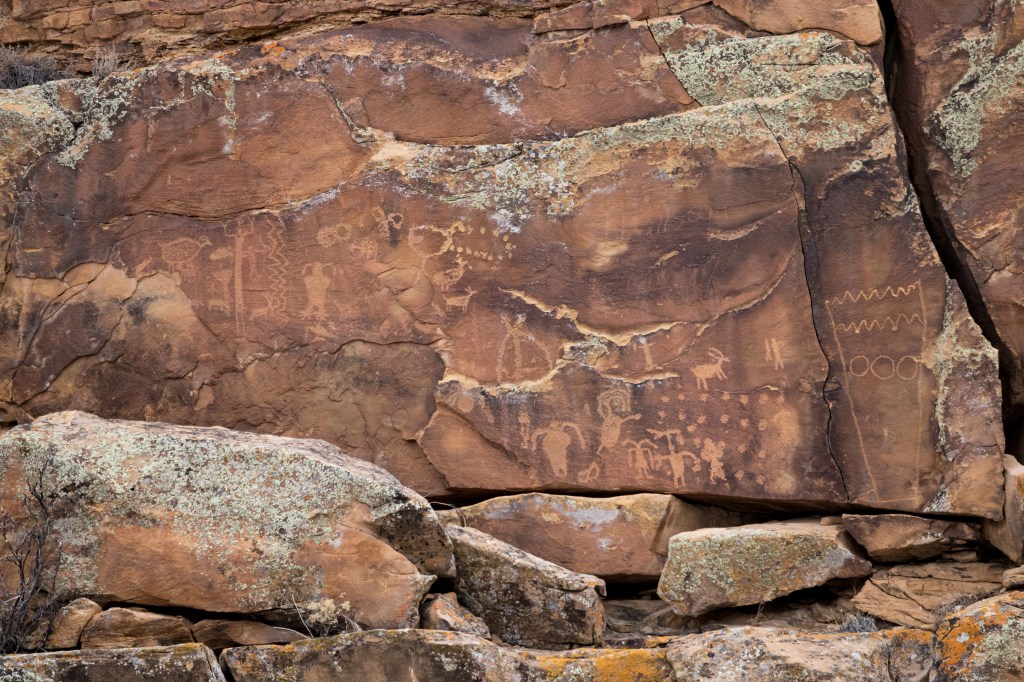
The 46 miles of Nine Mile Canyon contain thousands of rock art sites, with collectively tens or even hundreds of thousands of individual rock art images, and many more yet to be discovered. These rock art images, properly called petroglyphs, are made by chipping, and chiseling away the dark surface rock on surfaces, exposing the lighter-toned rock underneath. Alternatively, the people also made pictographs, which differ from petroglyphs as they’re painted onto rock rather than chiseled into. It was at the culture’s peak that the Fremont people settled the canyon, and throughout this time they filled the walls of Nine Mile with petroglyphs, pictographs, and numerous structures left from their time here. When the Ute people arrived here in the 16th century, they added their art to the walls, however not anywhere within the volume of the Fremont. With the sheer number of pieces of art, all contained over such a small area, Nine Mile Canyon is the most concentrated rock art site in the world.
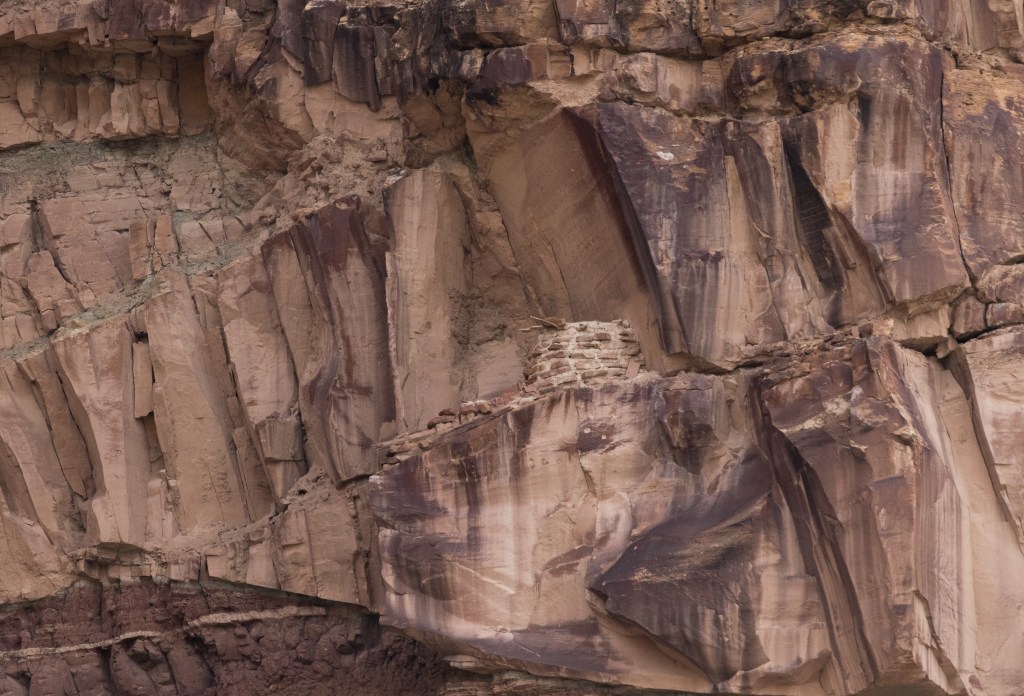
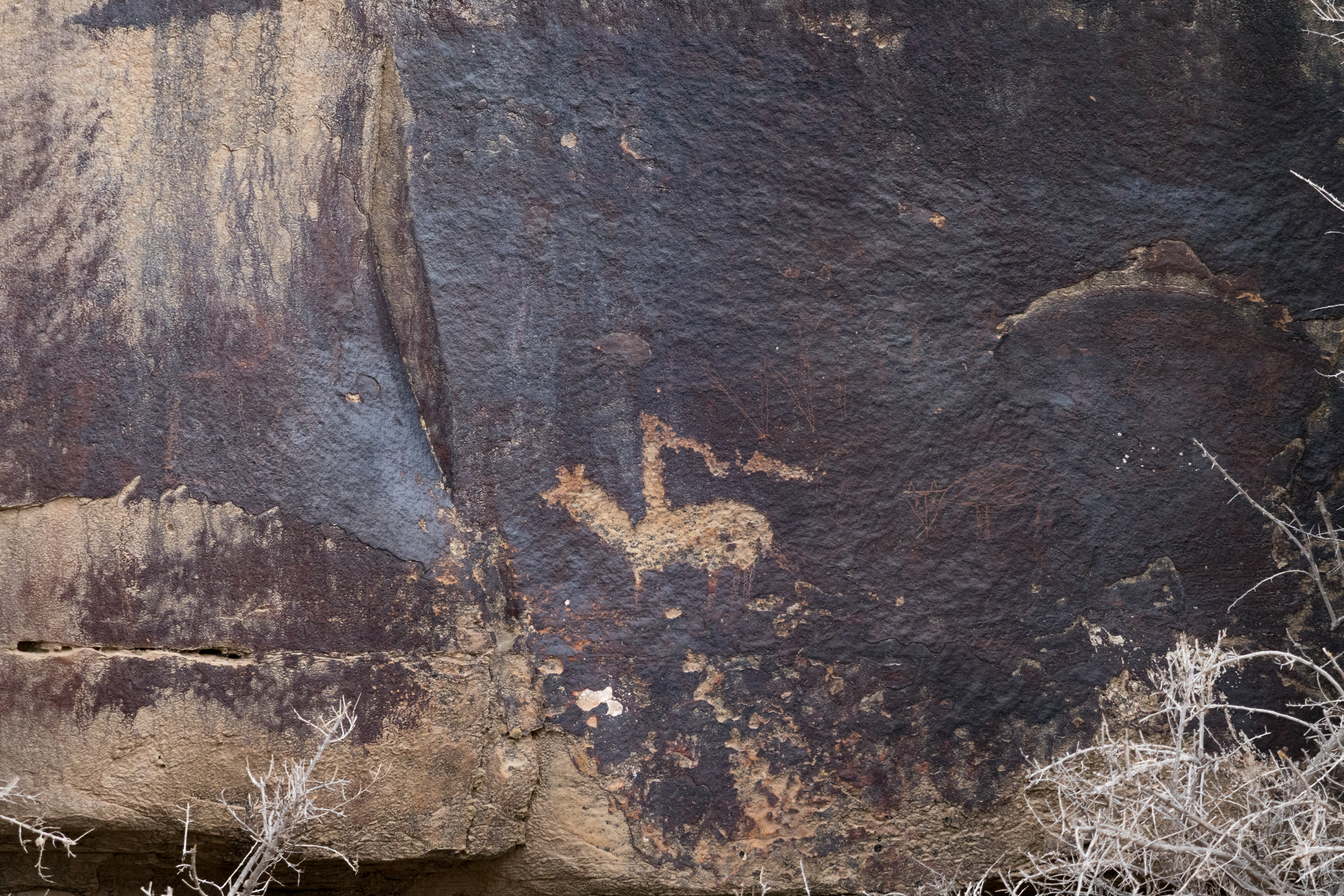
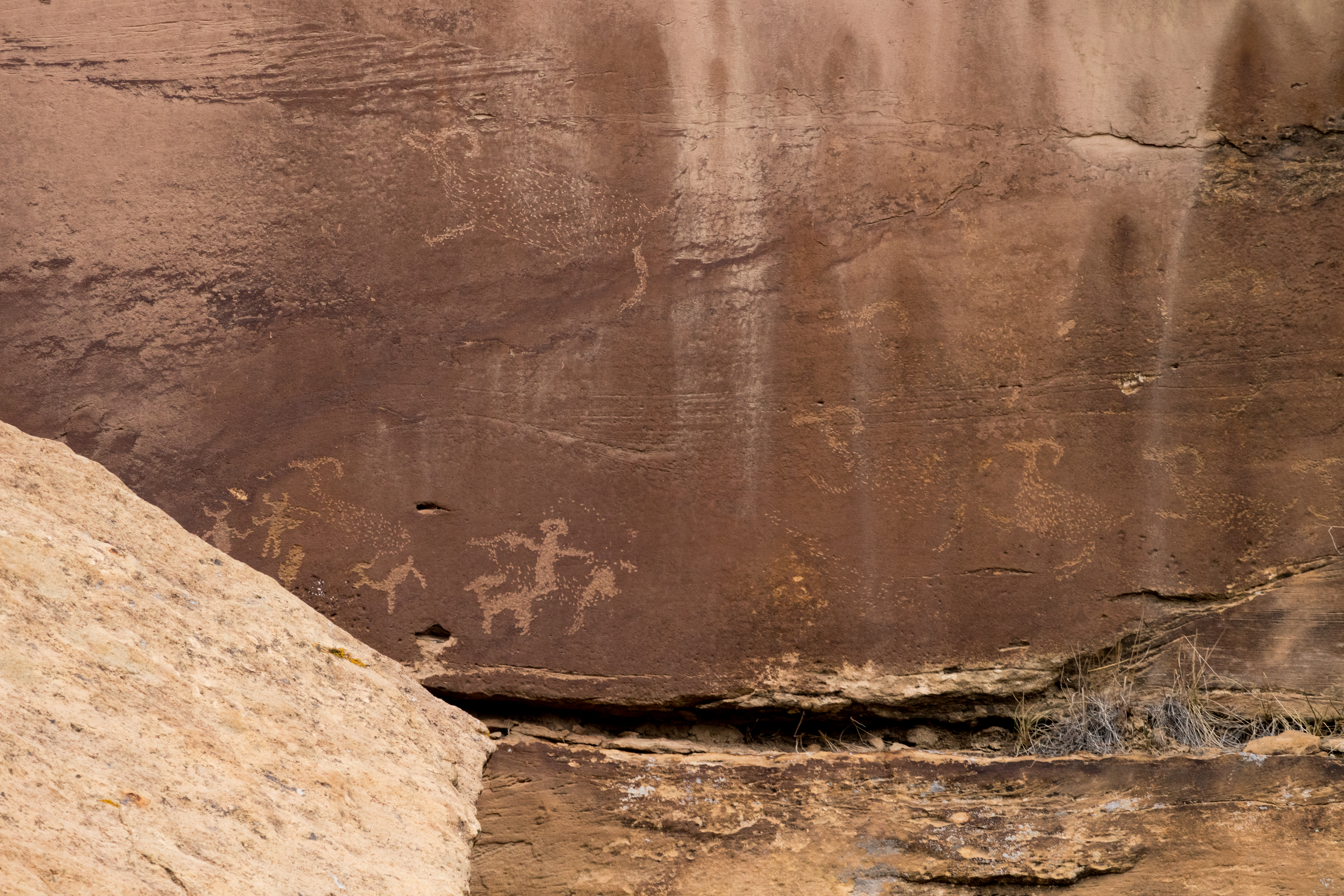
Driving through the canyon, carefully watching the lower walls reveals the relics of these ancient people. Depictions of animals like bighorn sheep, elk, mule deer, dogs, birds, snakes, and lizards give a sense of the local wildlife of the time and provide strong support for the notion of the area’s lusher climate.
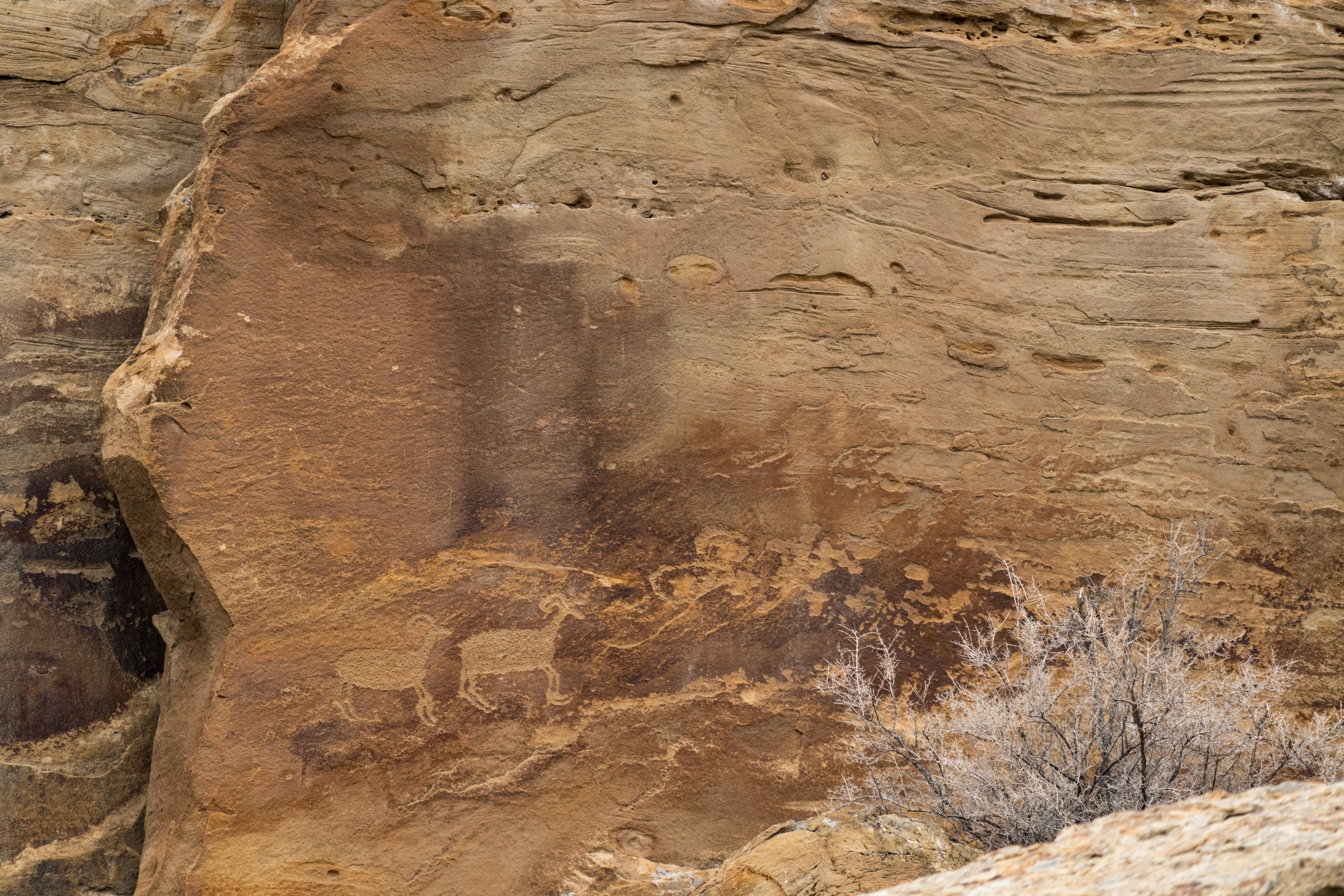
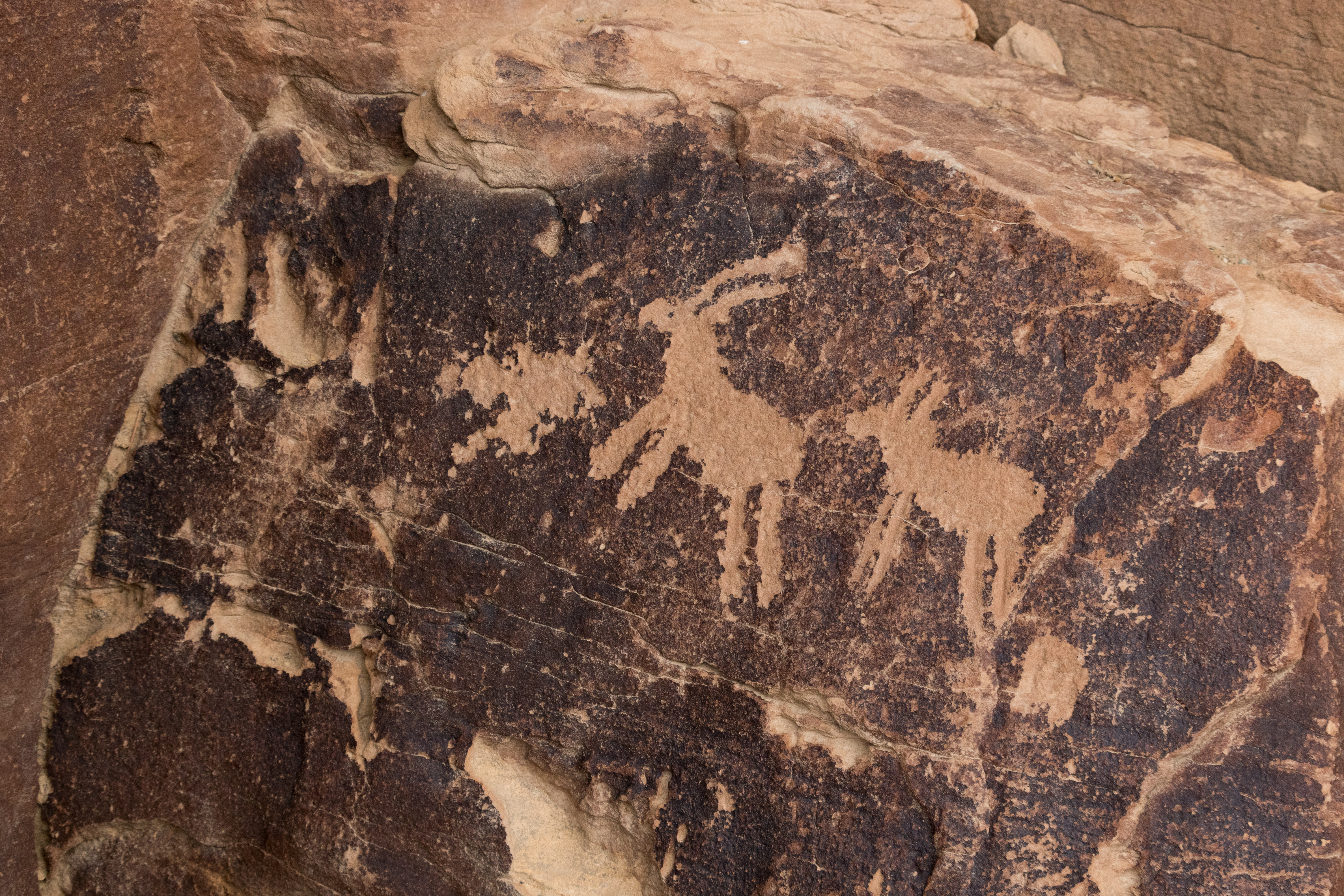
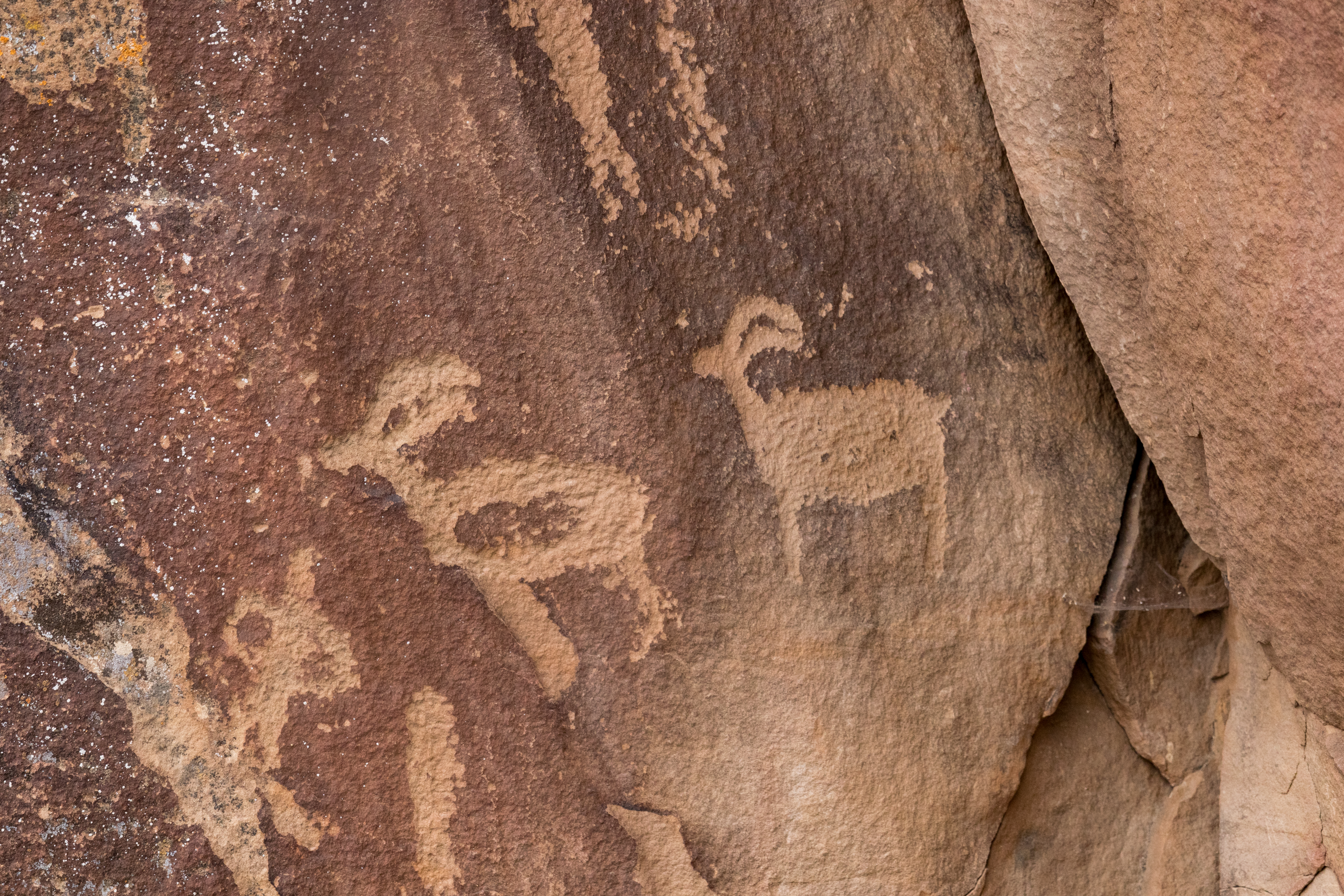
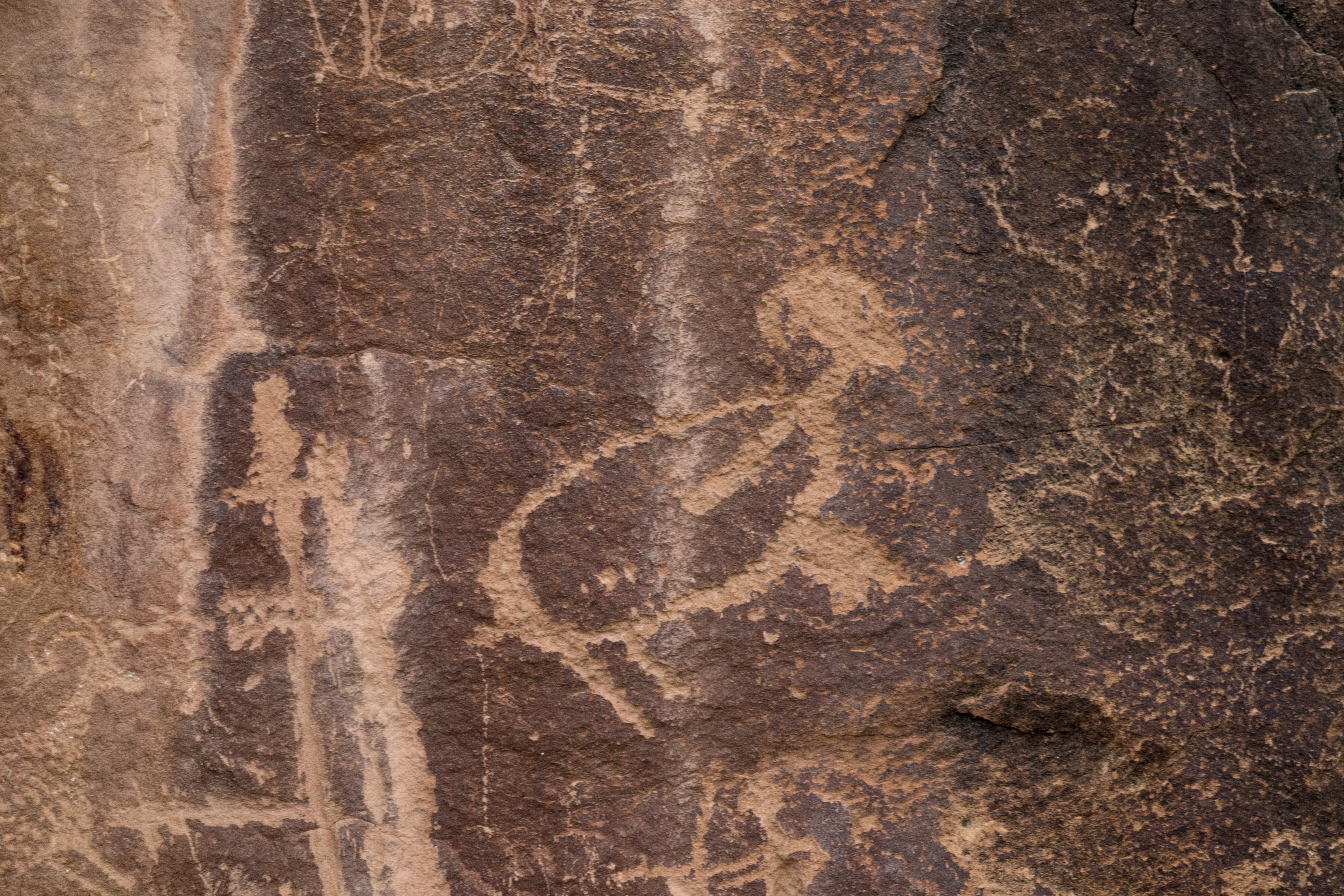
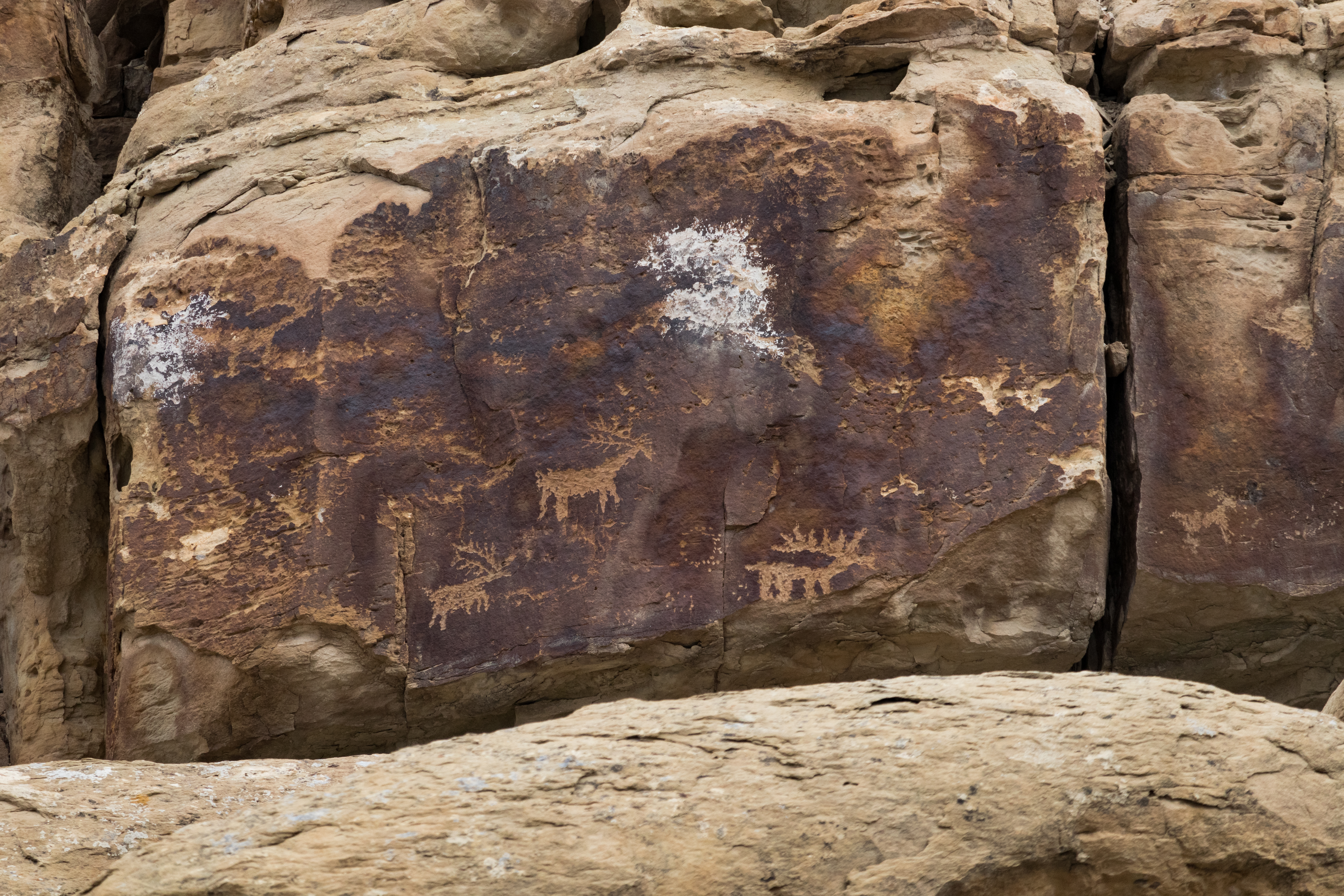
Activities like hunting these animals are displayed in the art of the canyon and reveal the lifestyle of the Fremont people. Hunting bighorn sheep was a large part of the people’s culture. Their numerous accounts of it in petroglyphs show this, as about half of the rock panels contain their likeness.
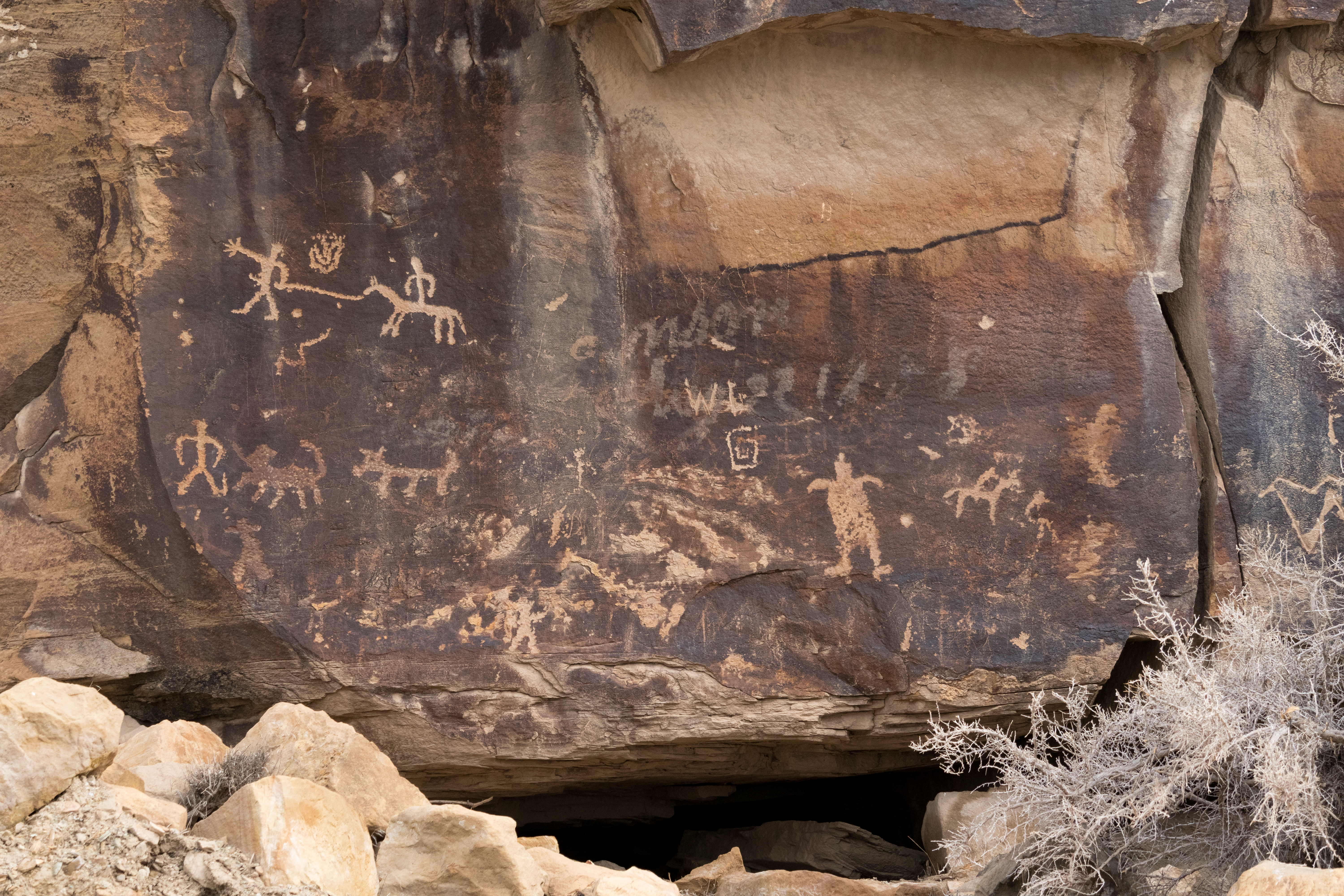
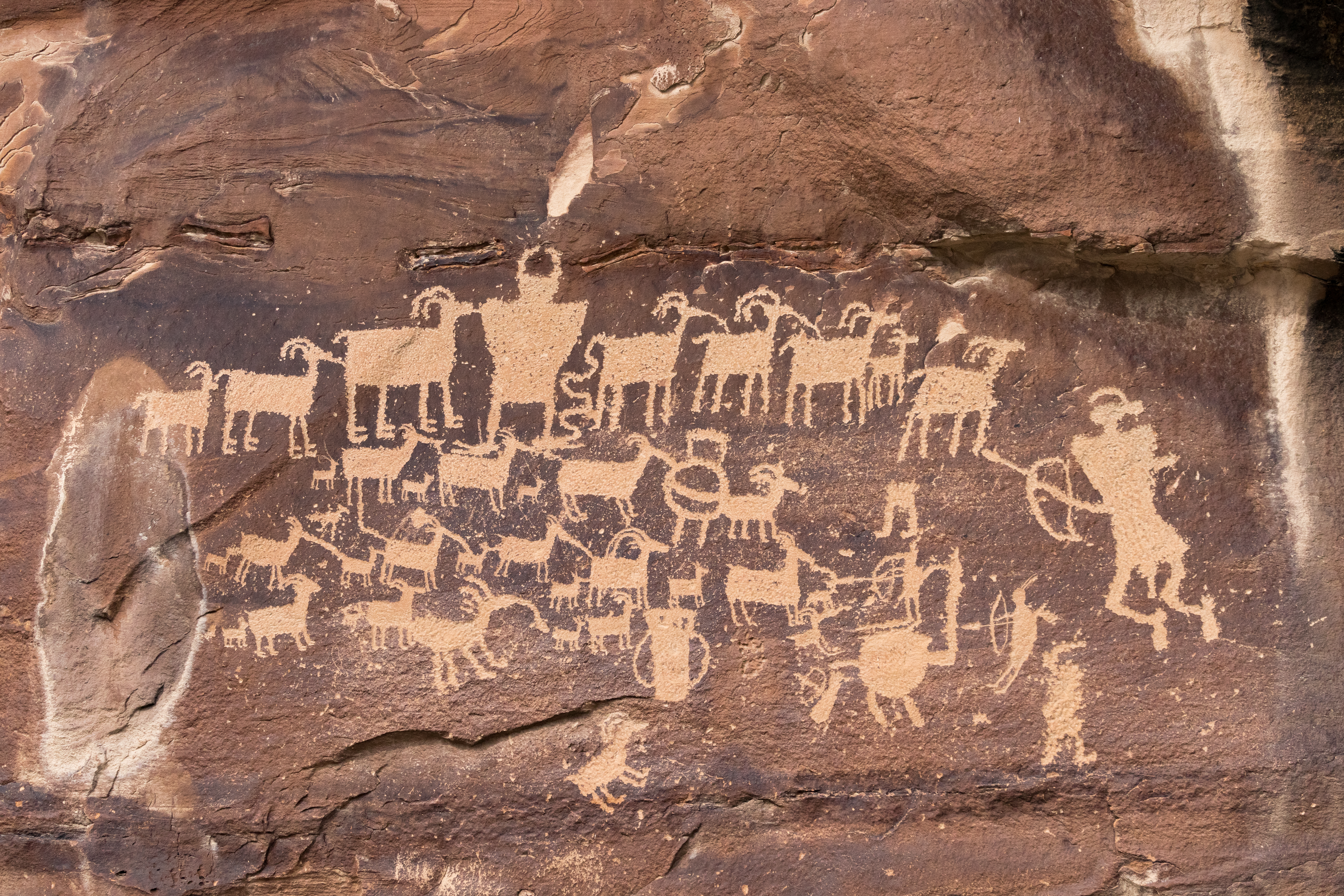
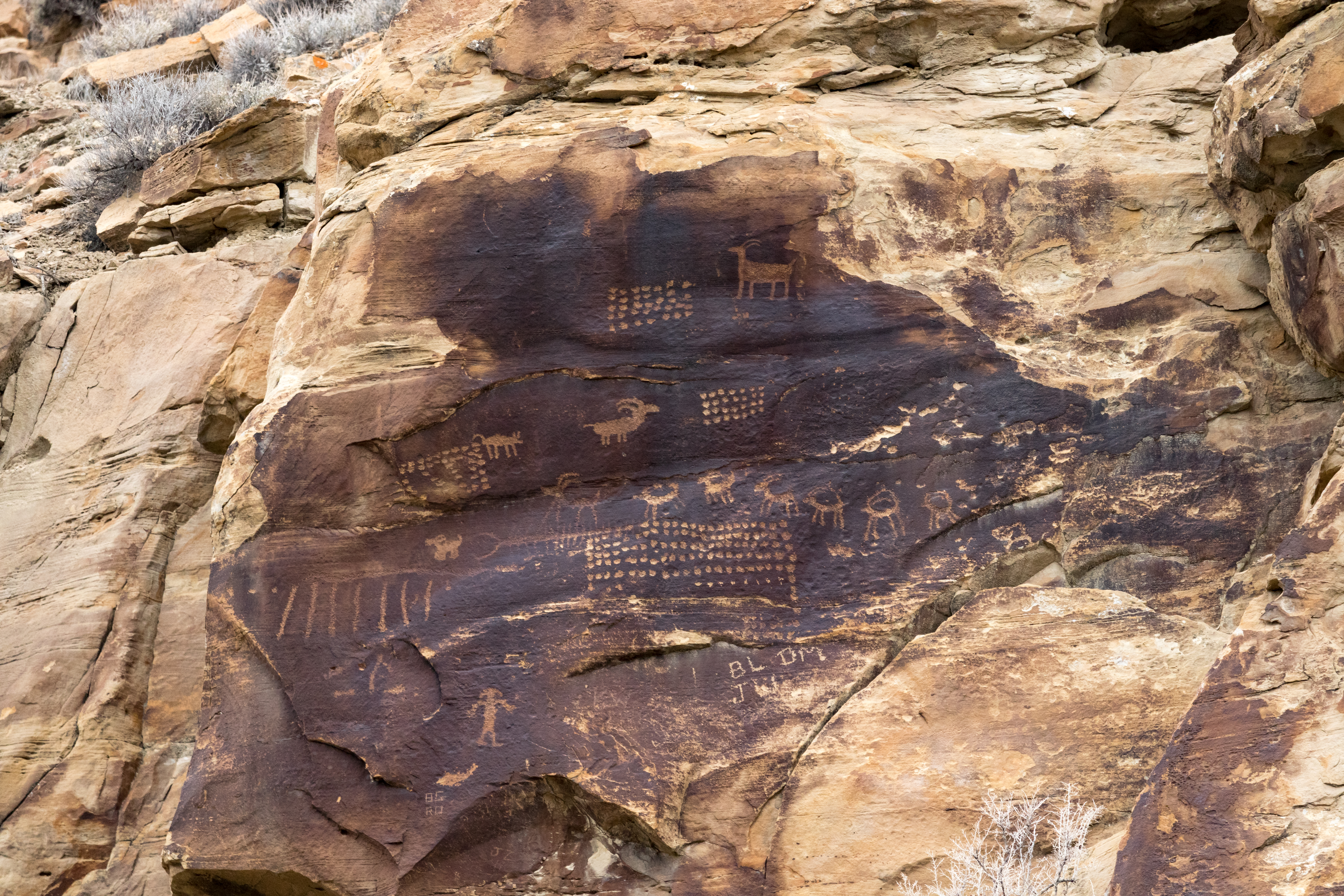
The petroglyph panel in the best condition of those in the canyon, and likely one of the best in the world, shows a huge scene of a massive hunt of rams, ewes, and lambs. Aptly named The Great Hunt, the panel stretches about six feet wide and three feet high and sits on a rock hanging over the viewer’s head. Most likely a depiction of actual events, the time and effort put into this single panel strengthen the importance of this piece to the ancient residents of Nine Mile Canyon.
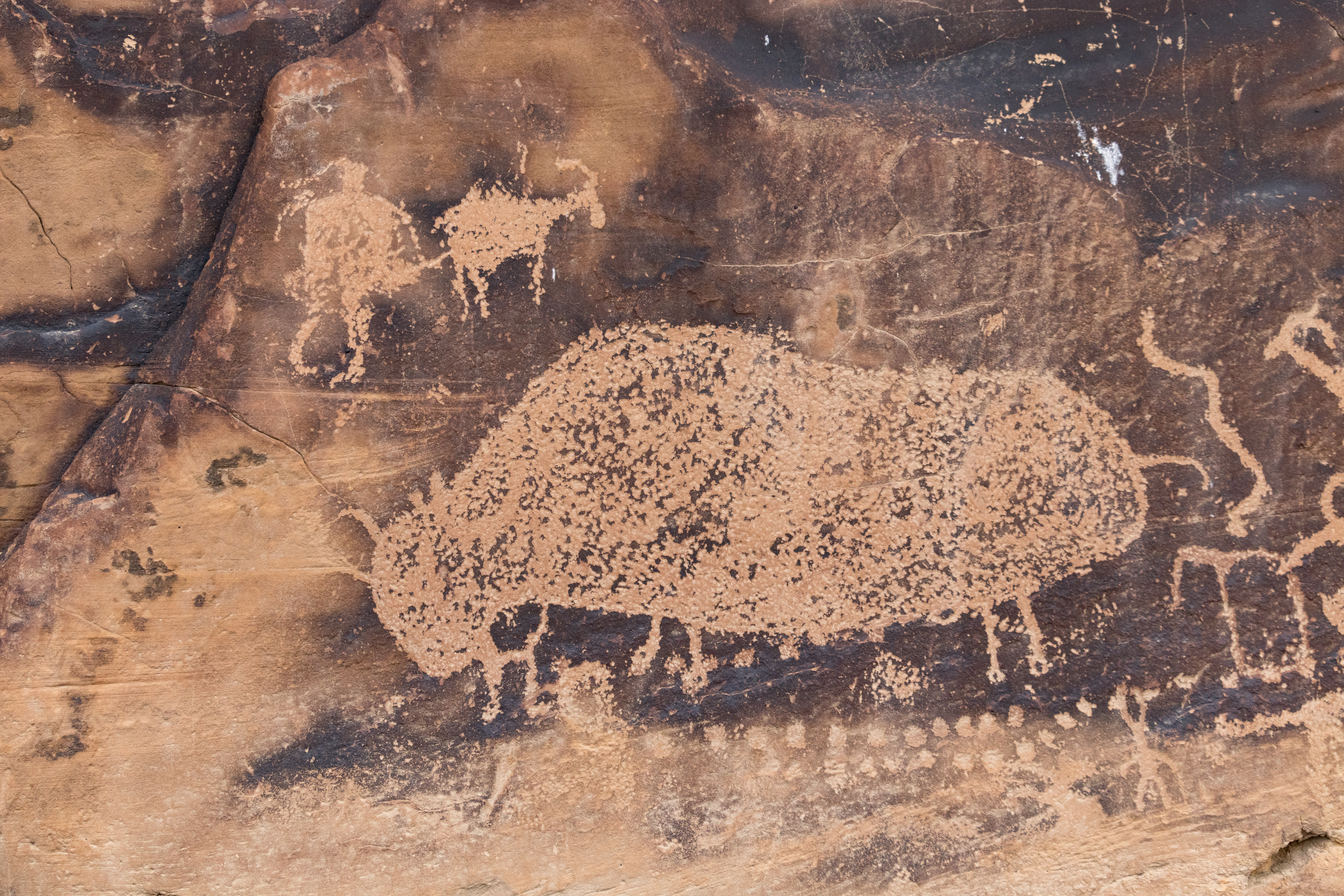
Buffalo may have also been present and important to the Fremont people of Nine Mile Canyon. One petroglyph panel, named Big Buffalo Panel, shows a large buffalo surrounded by smaller people and animal petroglyphs. This is the largest single panel in the canyon, stretching many feet with the buffalo itself being nearly three feet long.
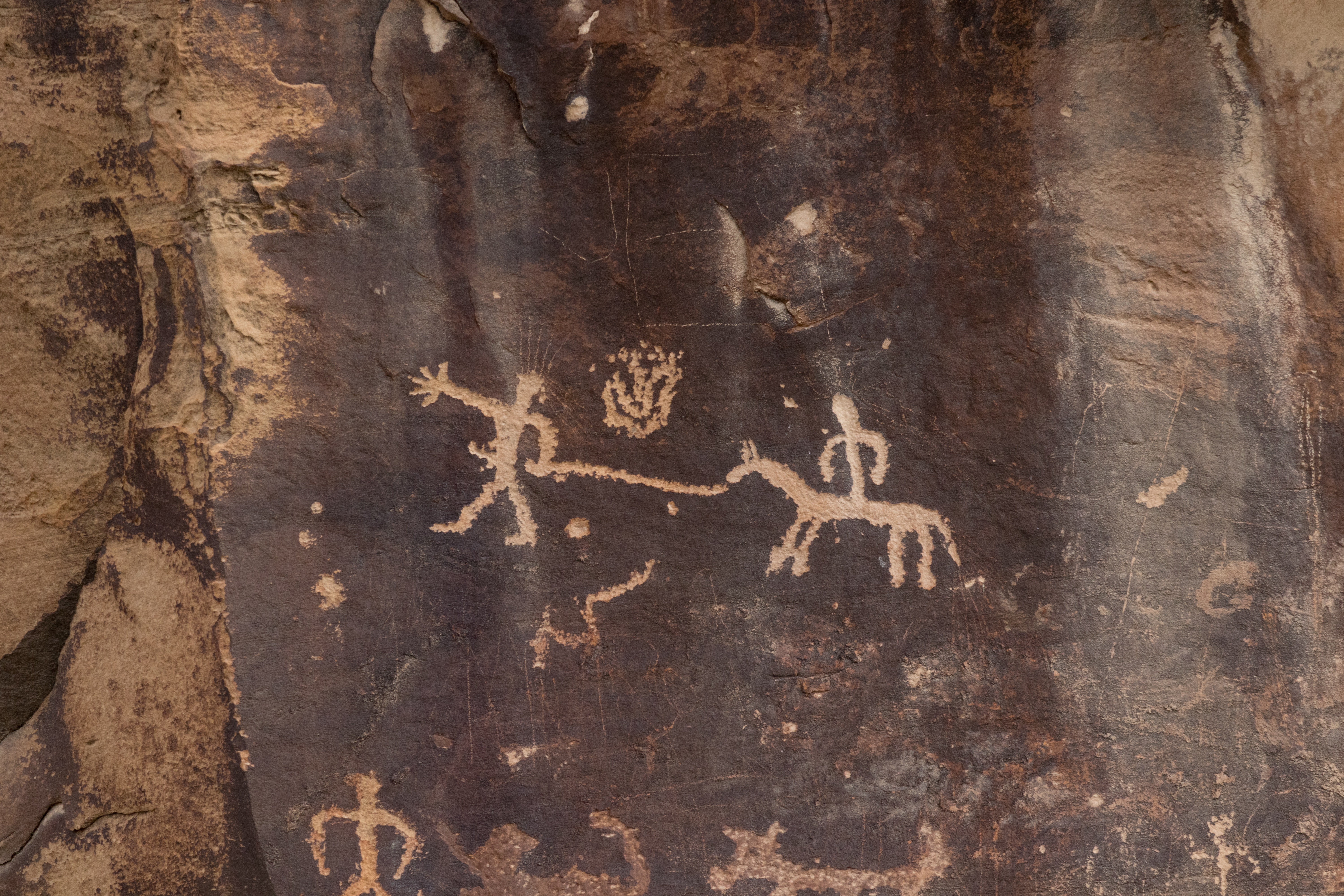
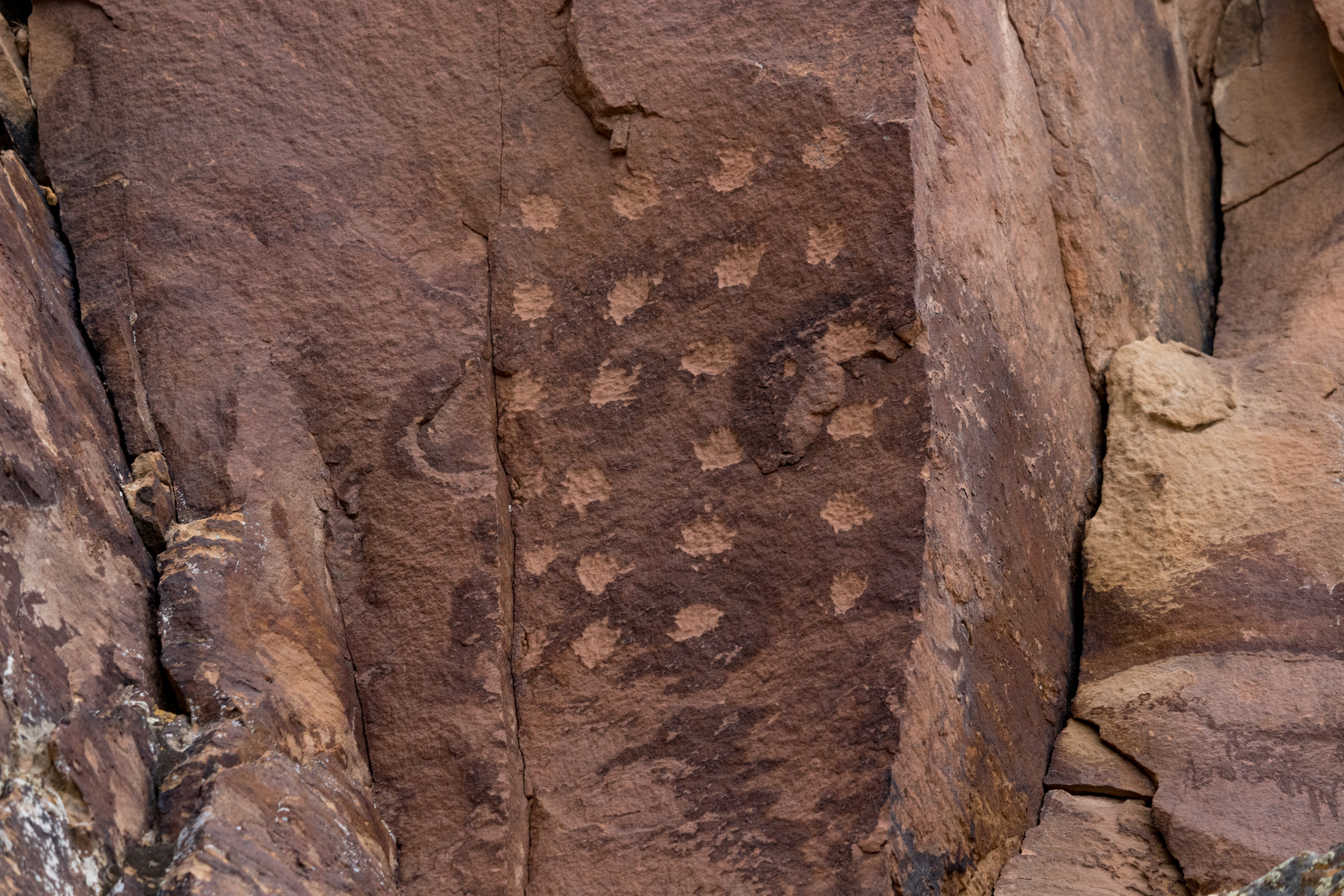
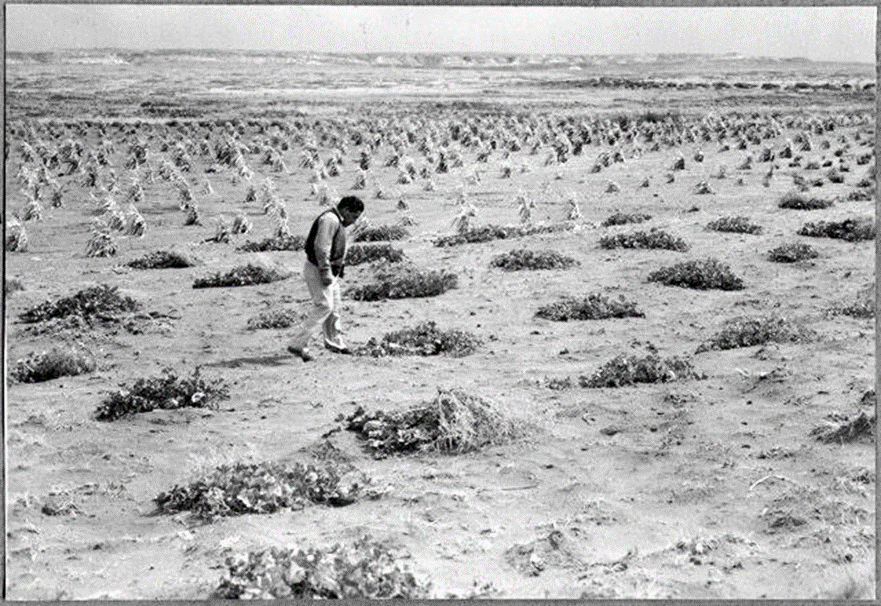
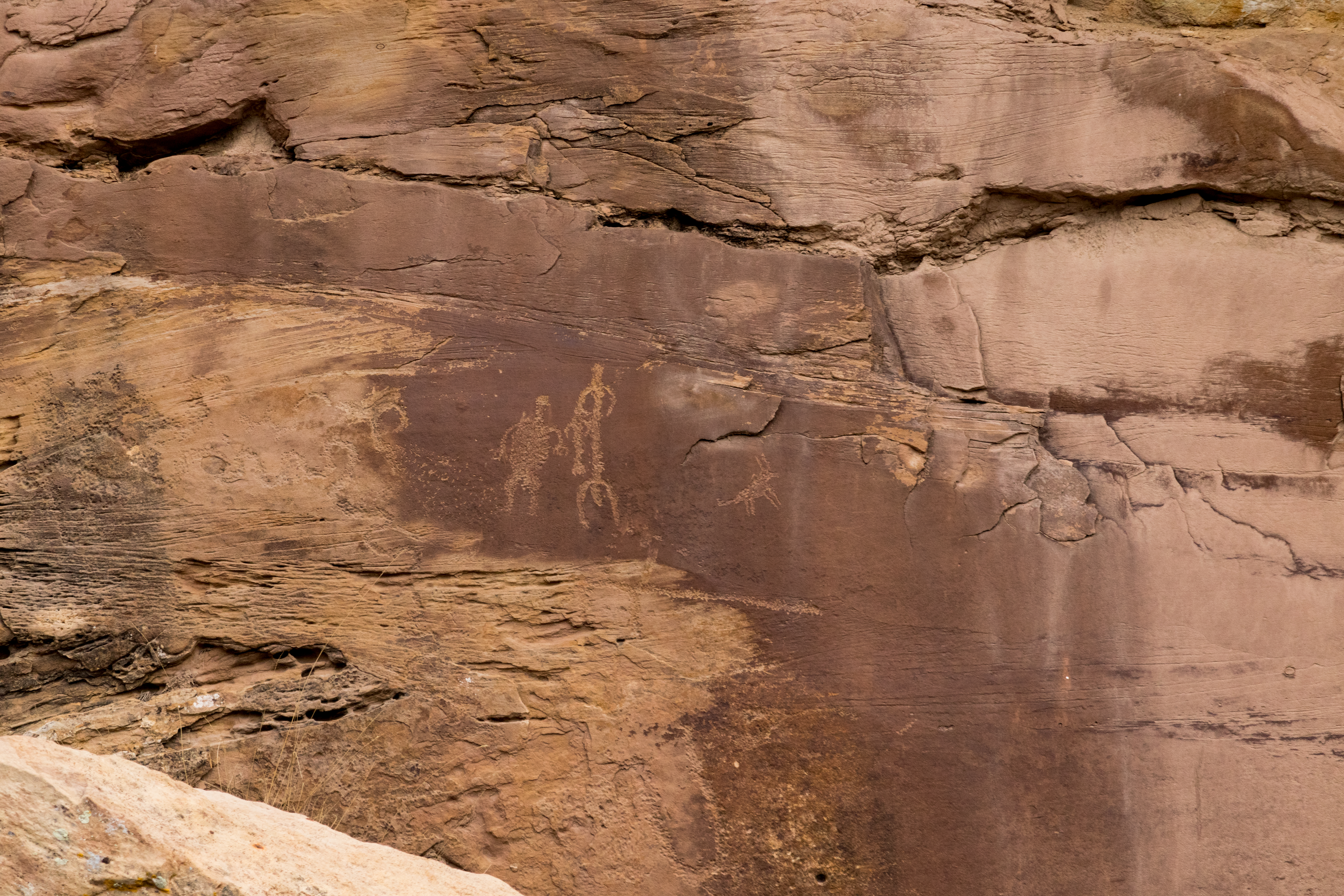
Besides animals, the Fremont people also made vast amounts of petroglyphs of their people, culture, and religion. Fremont people with bows and tools depict an active lifestyle. Dot patterns are seen in many panels, resembling the nearby crop fields, much like those used by the nearby Hopi people.
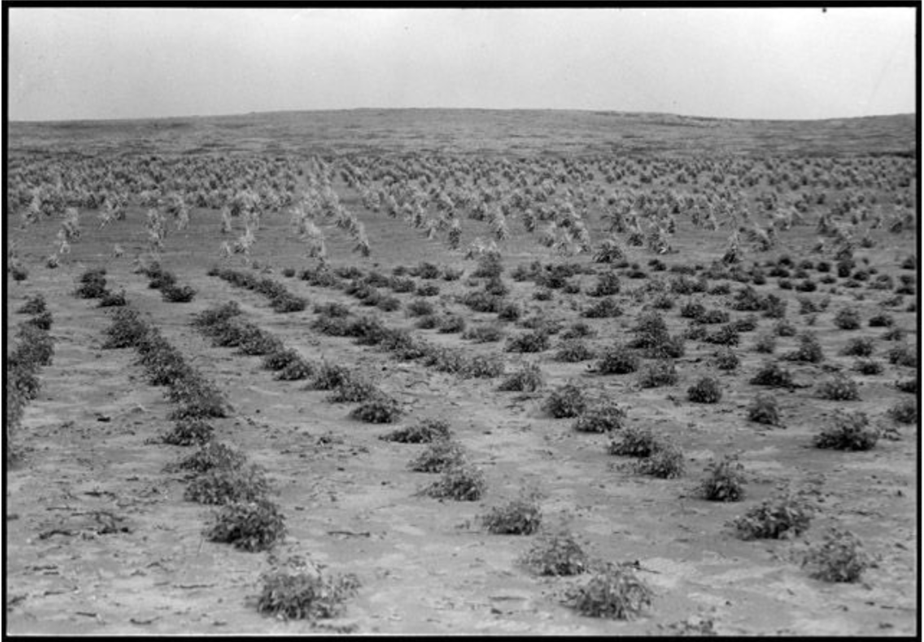
There are even images of people actively planting crops.
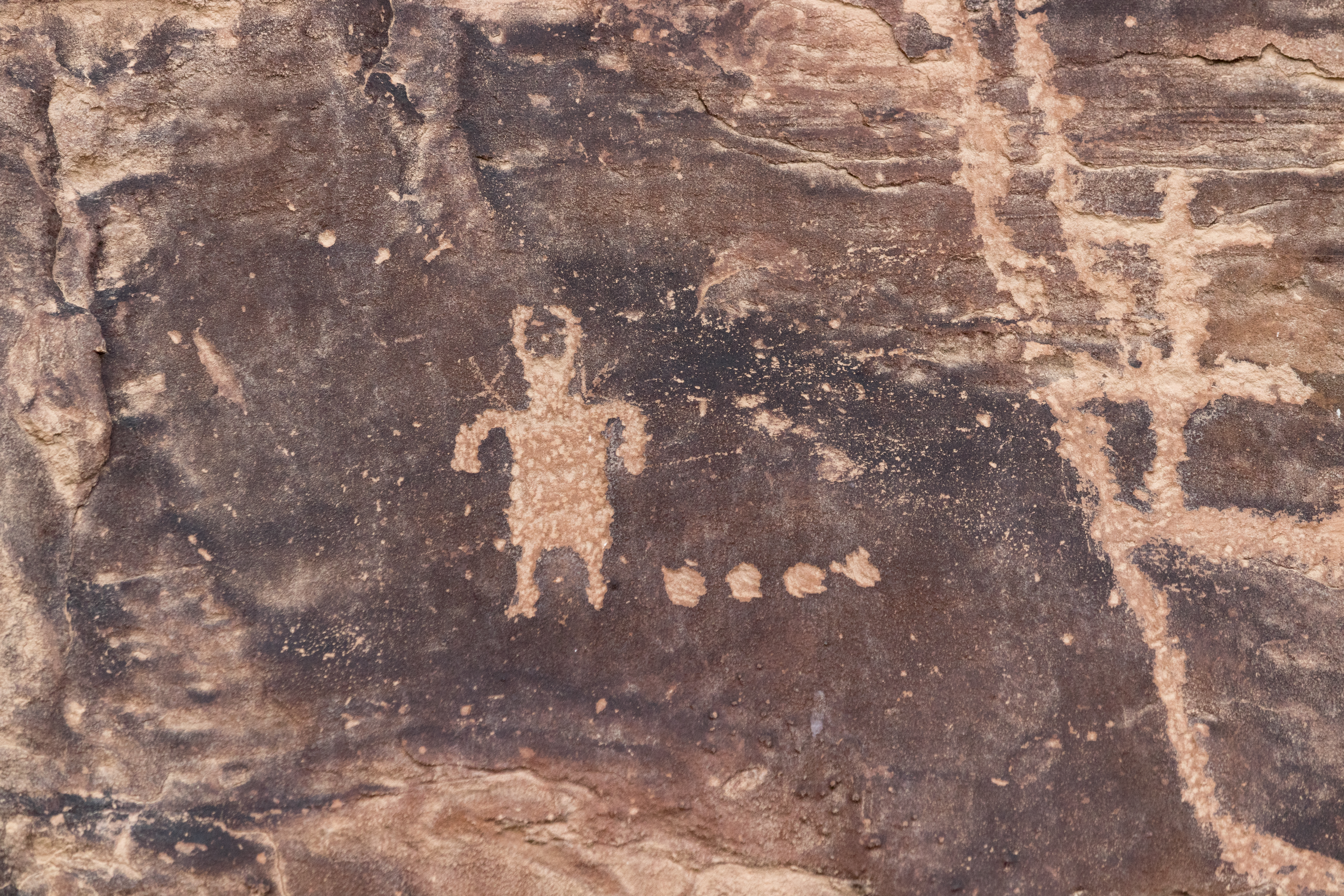
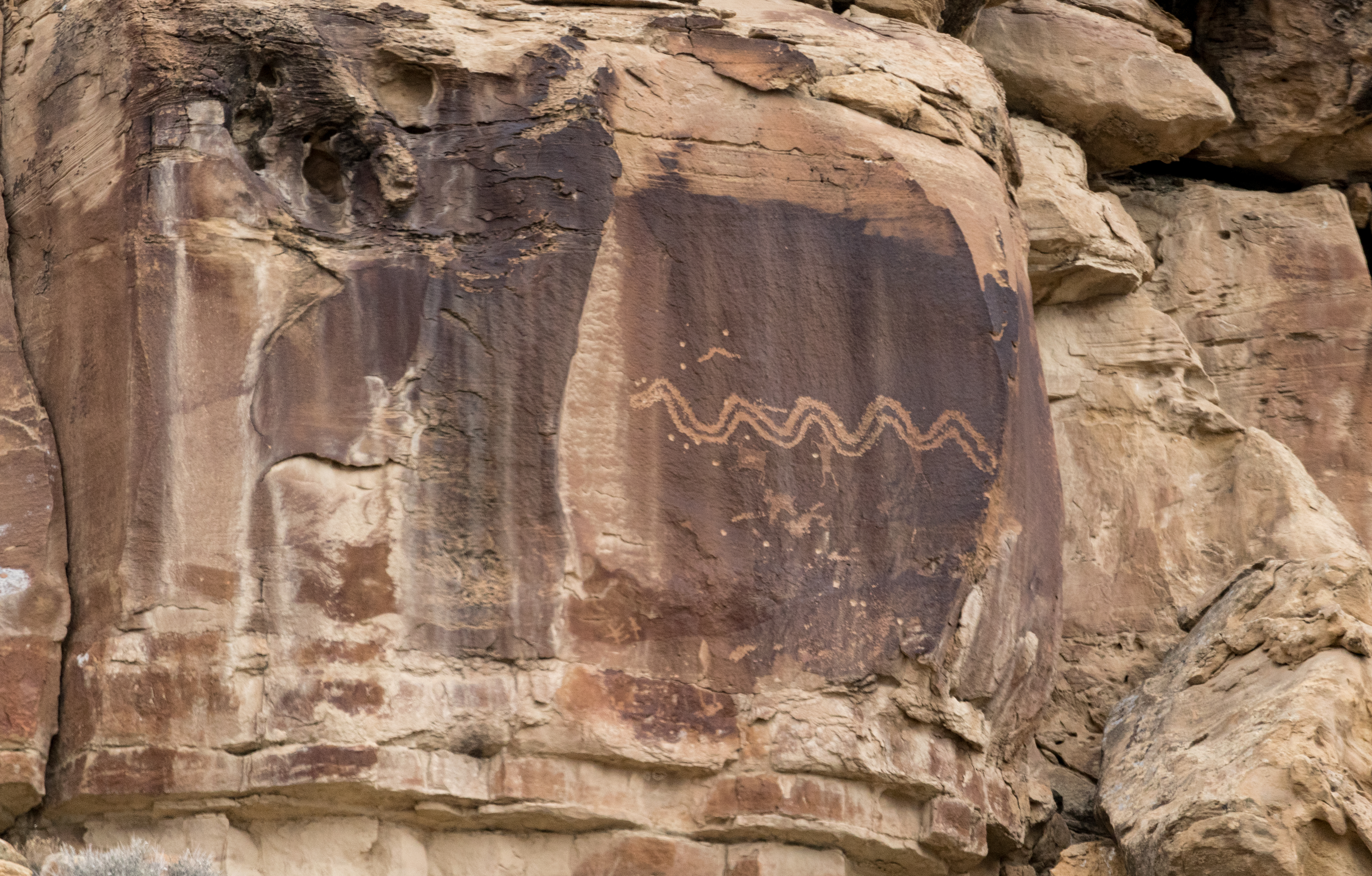
Petroglyphs often depict people with rectangular or trapezoidal bodies, large hands, and typically in a profile form. Sometimes with horns, likely ceremonial headdresses and headwear, as well as other pieces of jewelry, the people’s culture and activities are widely depicted and vary throughout the canyon. These figures, anthropomorphic in form, are also likely religious deities and figures, important to the Fremont people and their lifestyle. Religious and mythological events, hunts, and even crude maps are scattered along the canyon walls. Scenes of flood events, which are common in the canyon area, are typically seen paired with a snake-like deity. This deity, known as Awanyu, represents a long snaking figure like that of a flooded river.
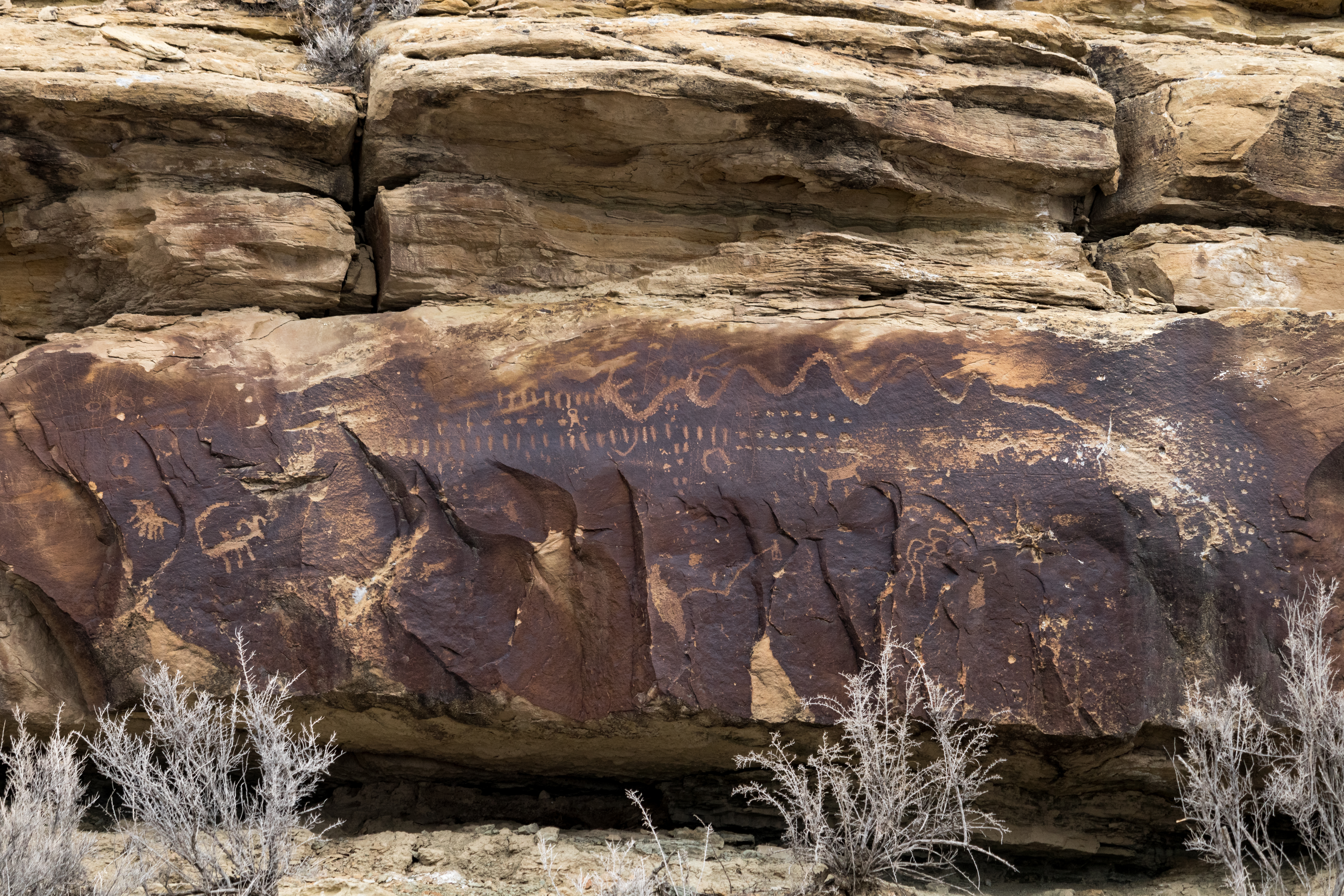
More panels show symbols of spirals, rings, and religious context. An impressively large scene, known as the Owl Panel, shows a large owl figure with numerous smaller birds around it. The main owl itself on the left is about 18 inches long, with the whole panel stretching about six or seven feet wide. Bear prints, religious figures, animals, handprints, and numerous other figures bring a story together, though largely unknown to us today.
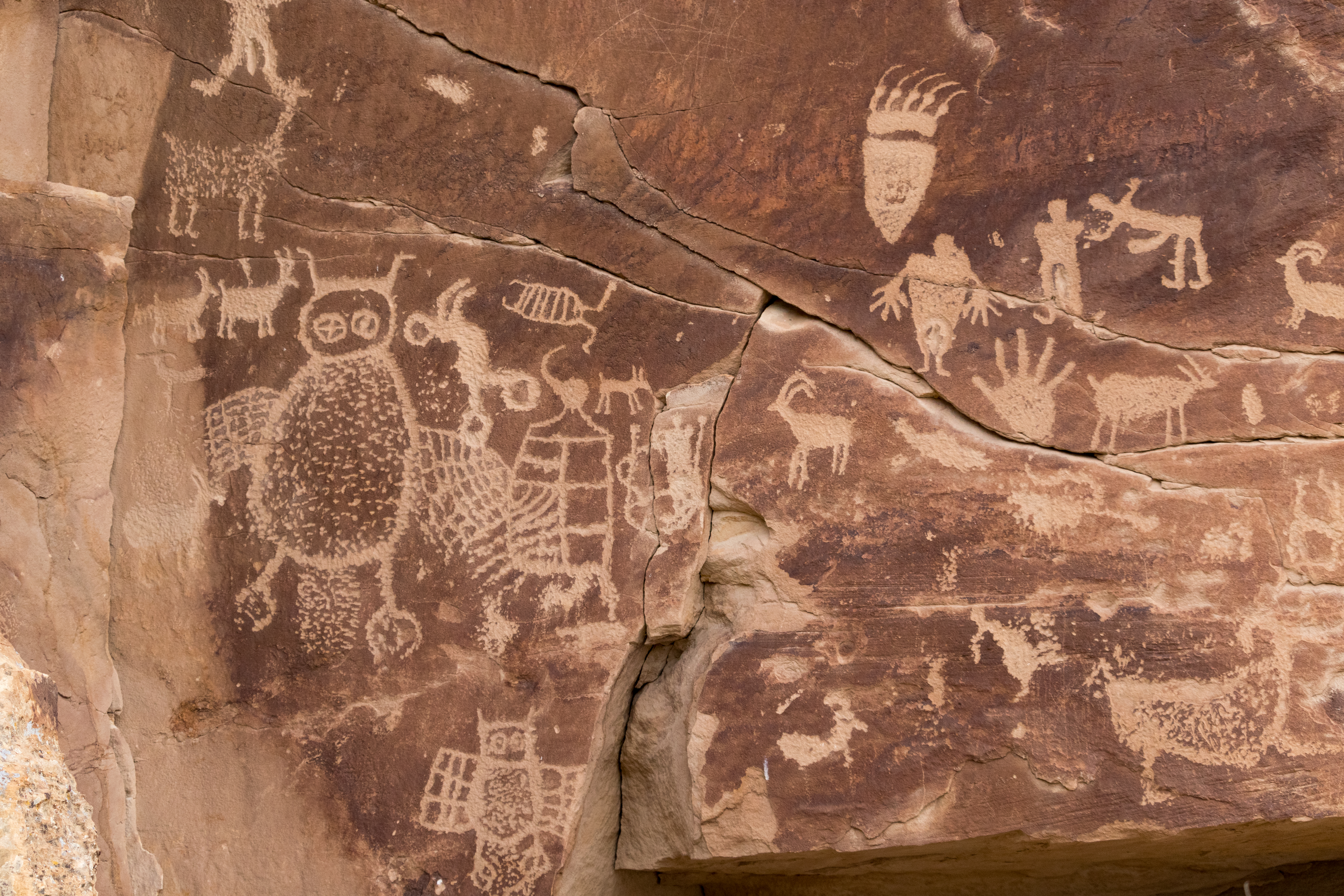
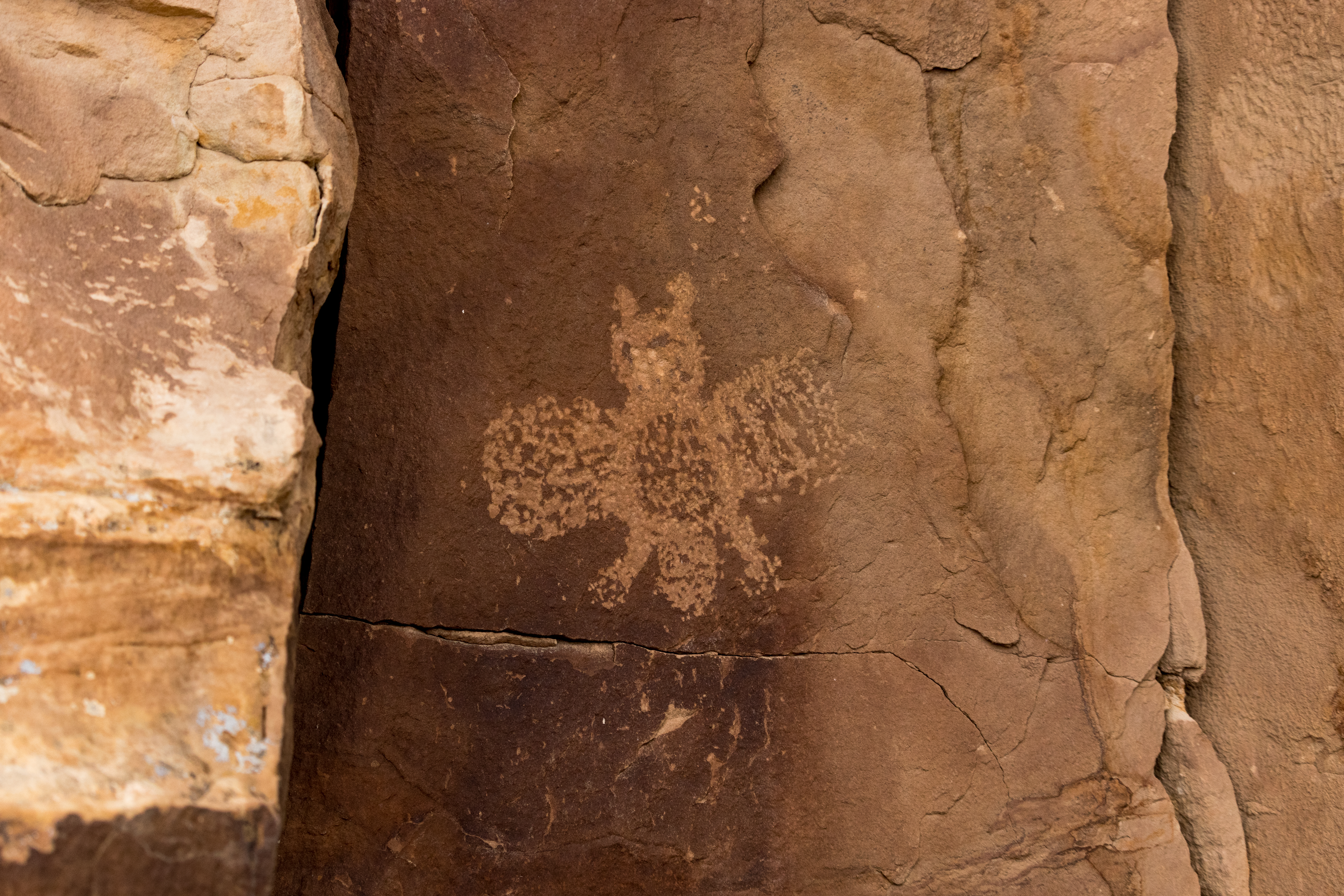
The Fremont people could also have used petroglyphs as useful tools. Spirals and circling rings could represent sundials and solar calendars, important for farming. Other patterns and symbols are more difficult to discern the meaning of. Nonetheless, they make for intriguing art and represent the creativity of this culture.
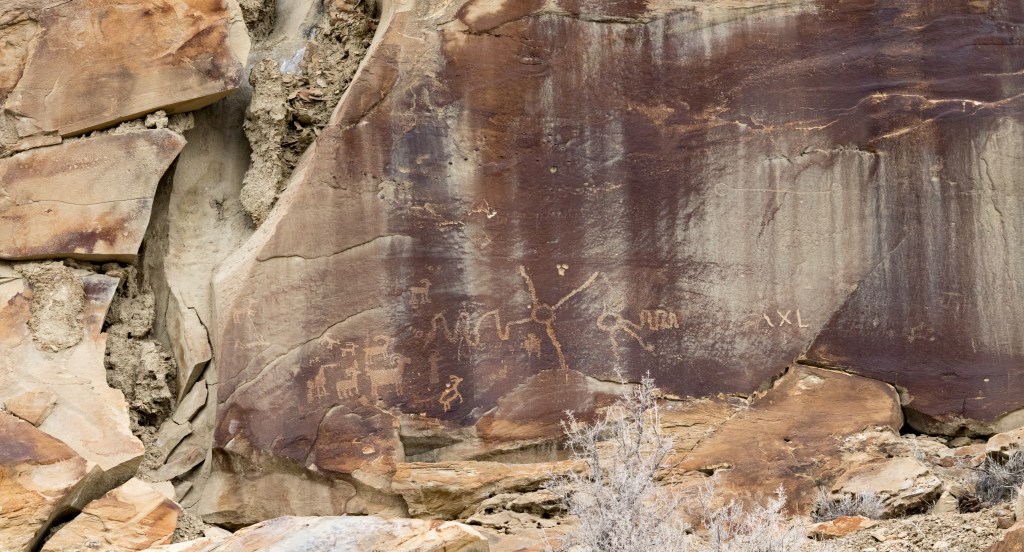
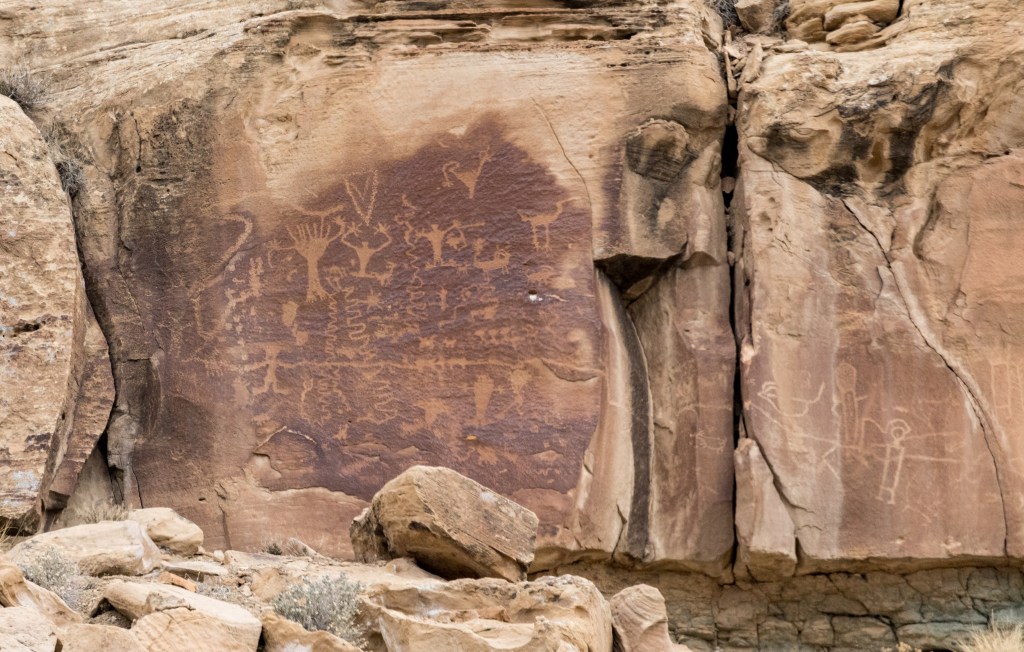
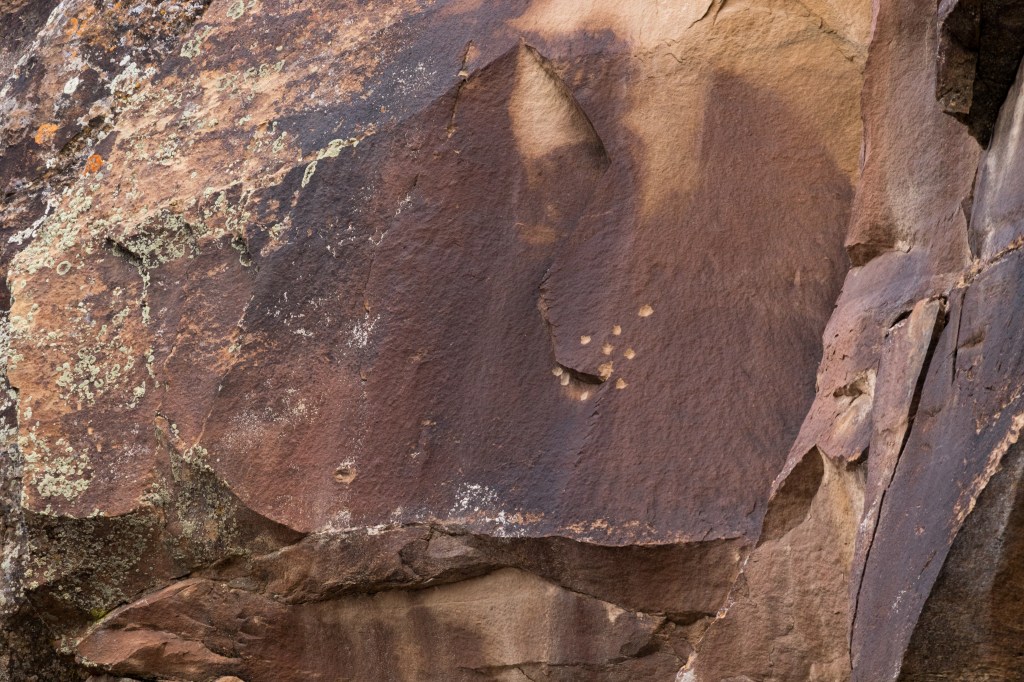
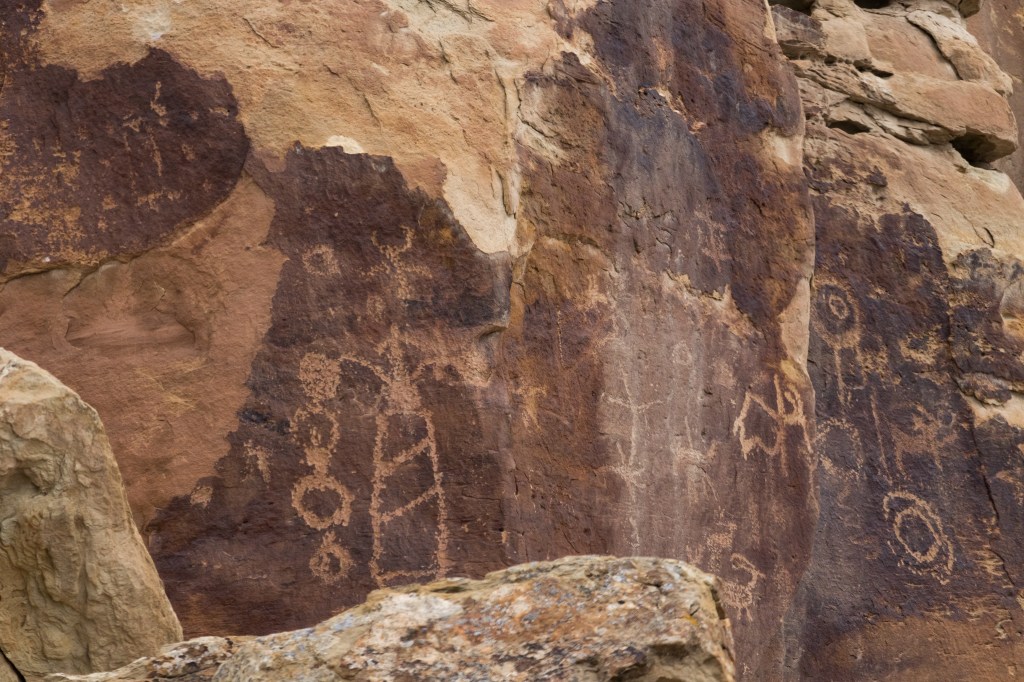
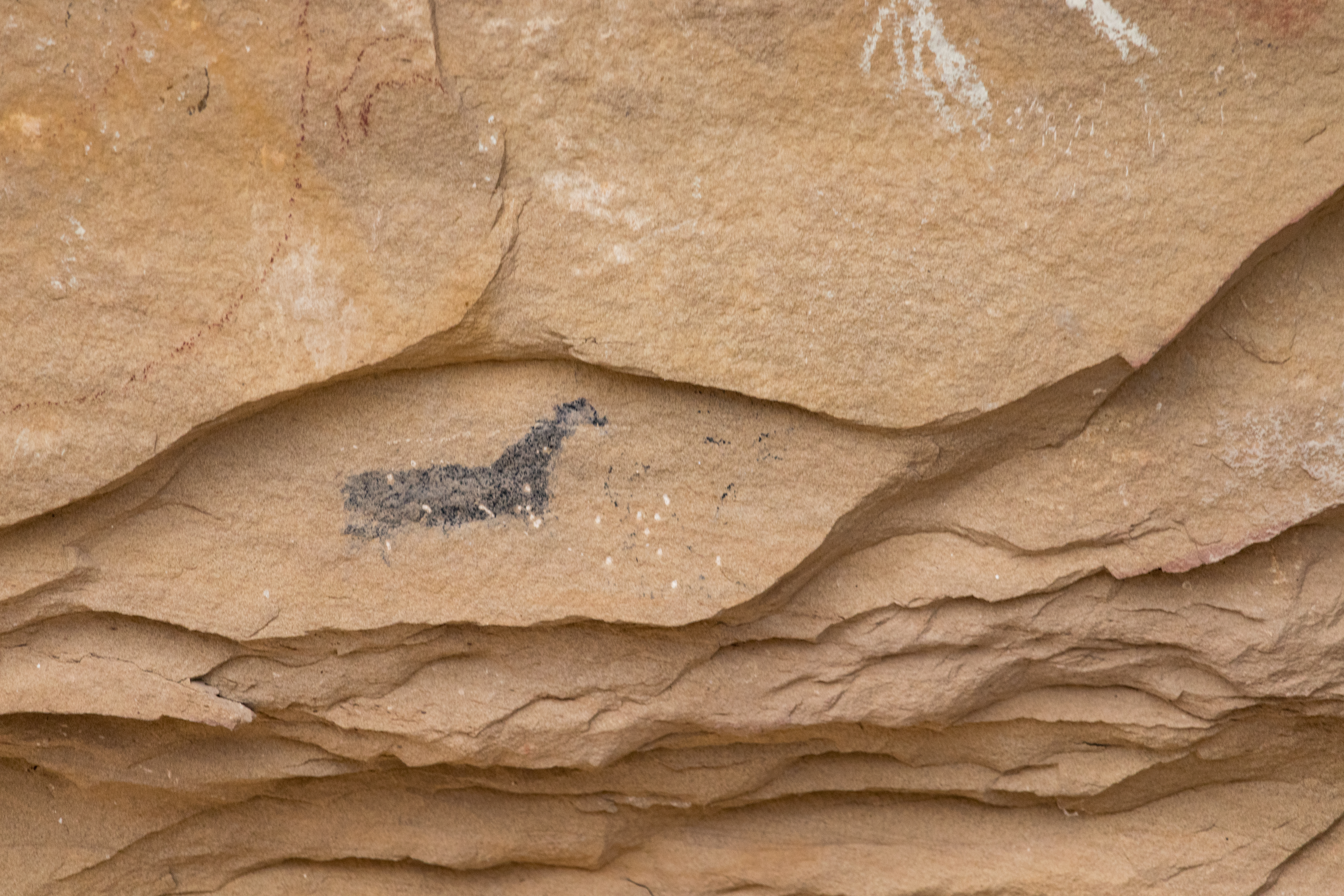
Along with the petroglyphs, several pictographs are on the canyon walls as well. Pictographs are pieces of art painted onto rock walls, unlike petroglyphs which are chiseled or carved into the rock. Though fewer in number, the size of the pictographs is typically larger than the local pictographs.
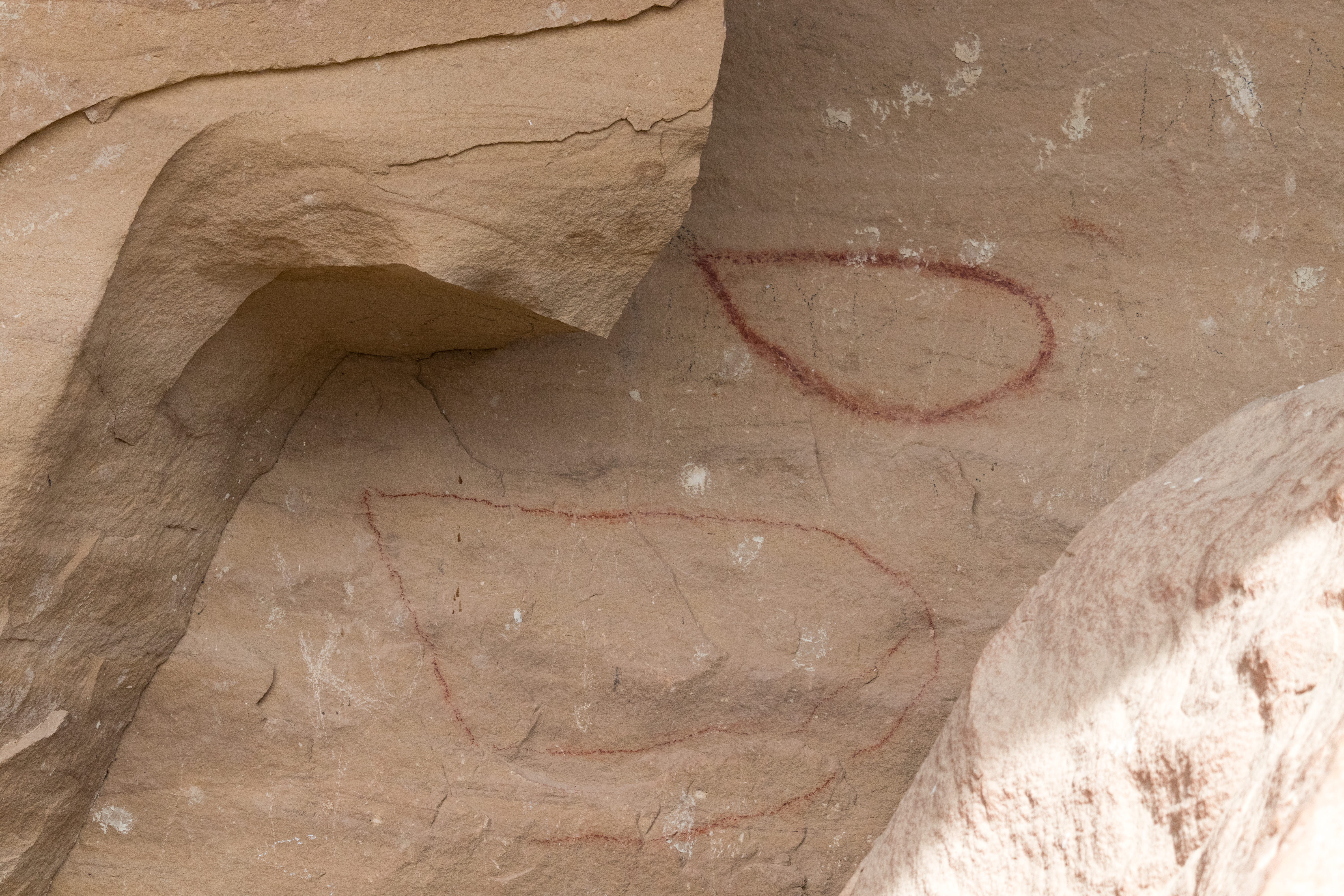
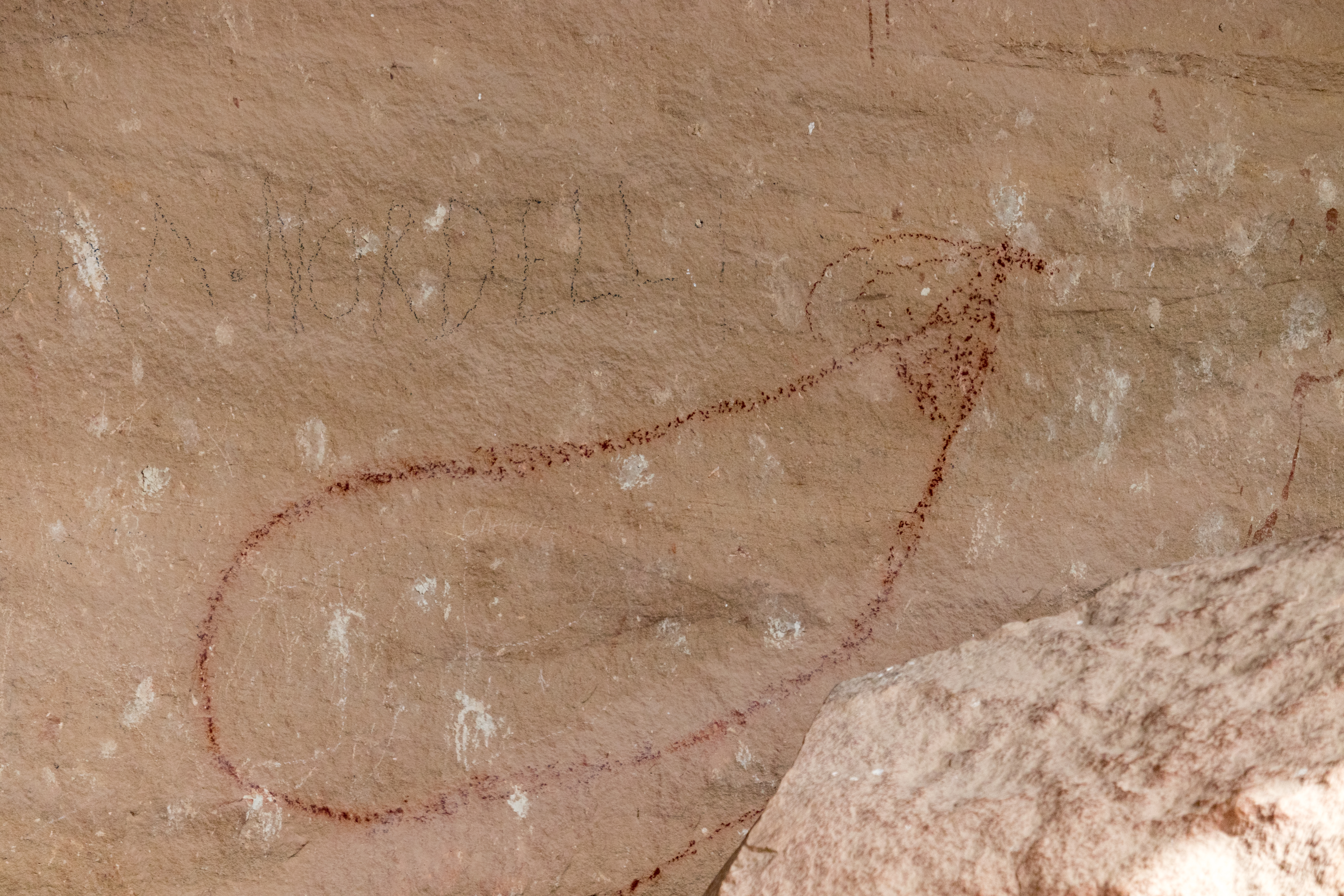
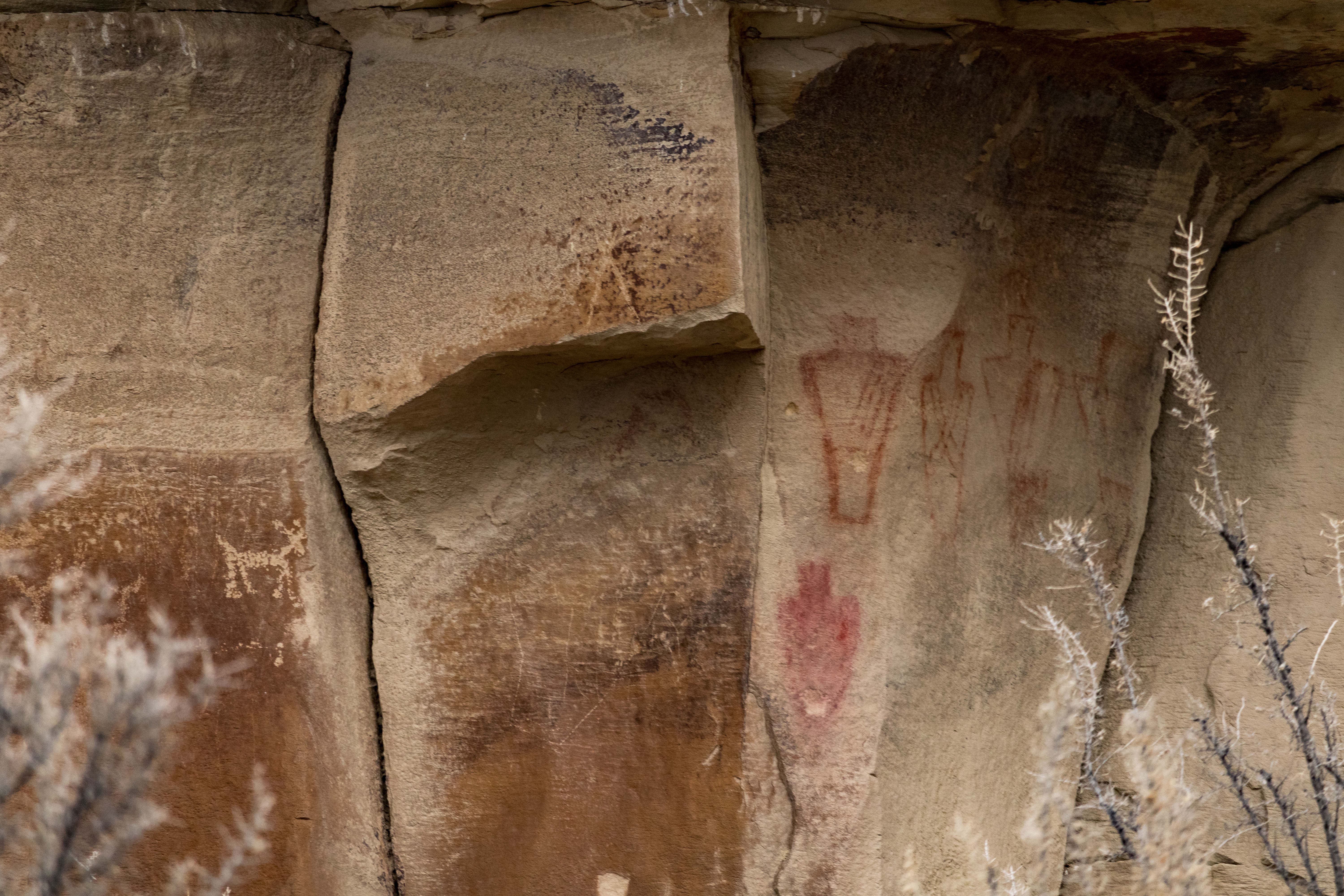
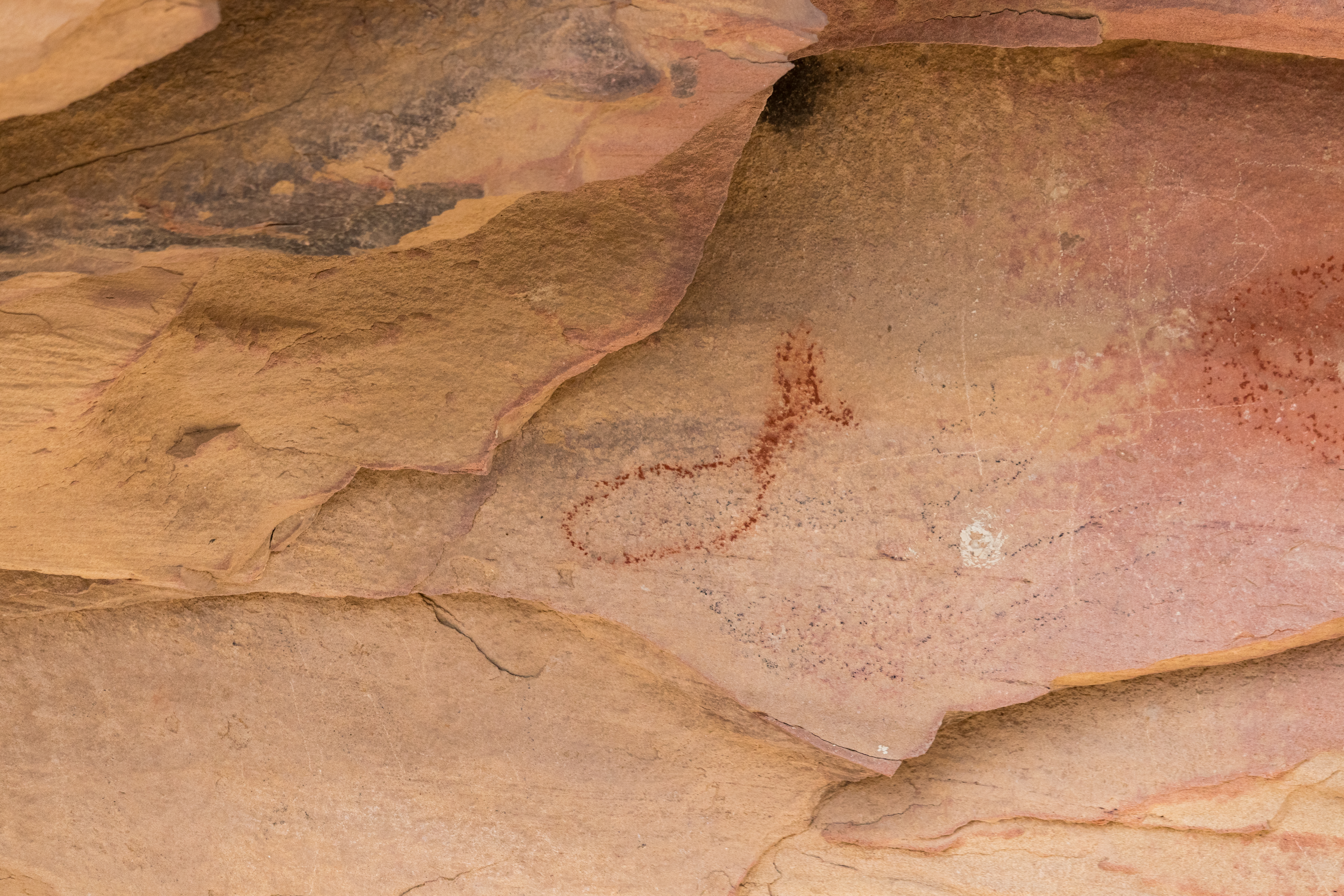
With the increased popularity of the canyon bringing more visitors each year, an unfortunate consequence can be seen all over the canyon. Graffiti and desecration of these pieces of art have, over time, ruined and removed many of the pieces of rock art close in proximity to the road that runs through. Names and symbols chiseled in typically try to avoid the already-existing petroglyphs, but many still cover up and ruin the art of the people that once inhabited this canyon. The fact that any exist at all is a disgrace to the fabulous and mysterious Fremont culture. This canyon should be explored with respect for those who previously inhabited it, and for studying this ancient and intricate culture. There’s lots to learn from the Fremont art scattered around the canyon, and the rest of the American Southwest.
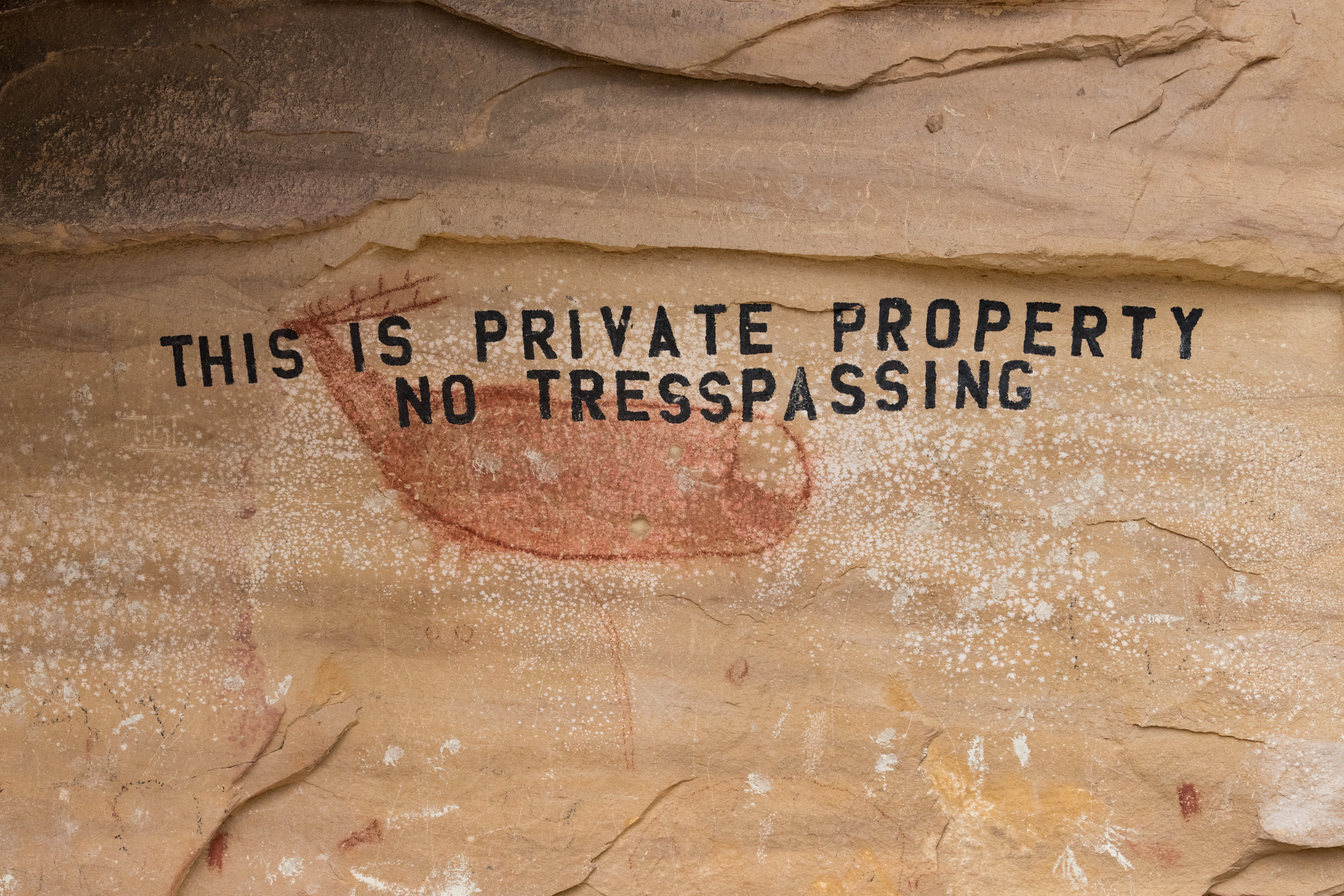
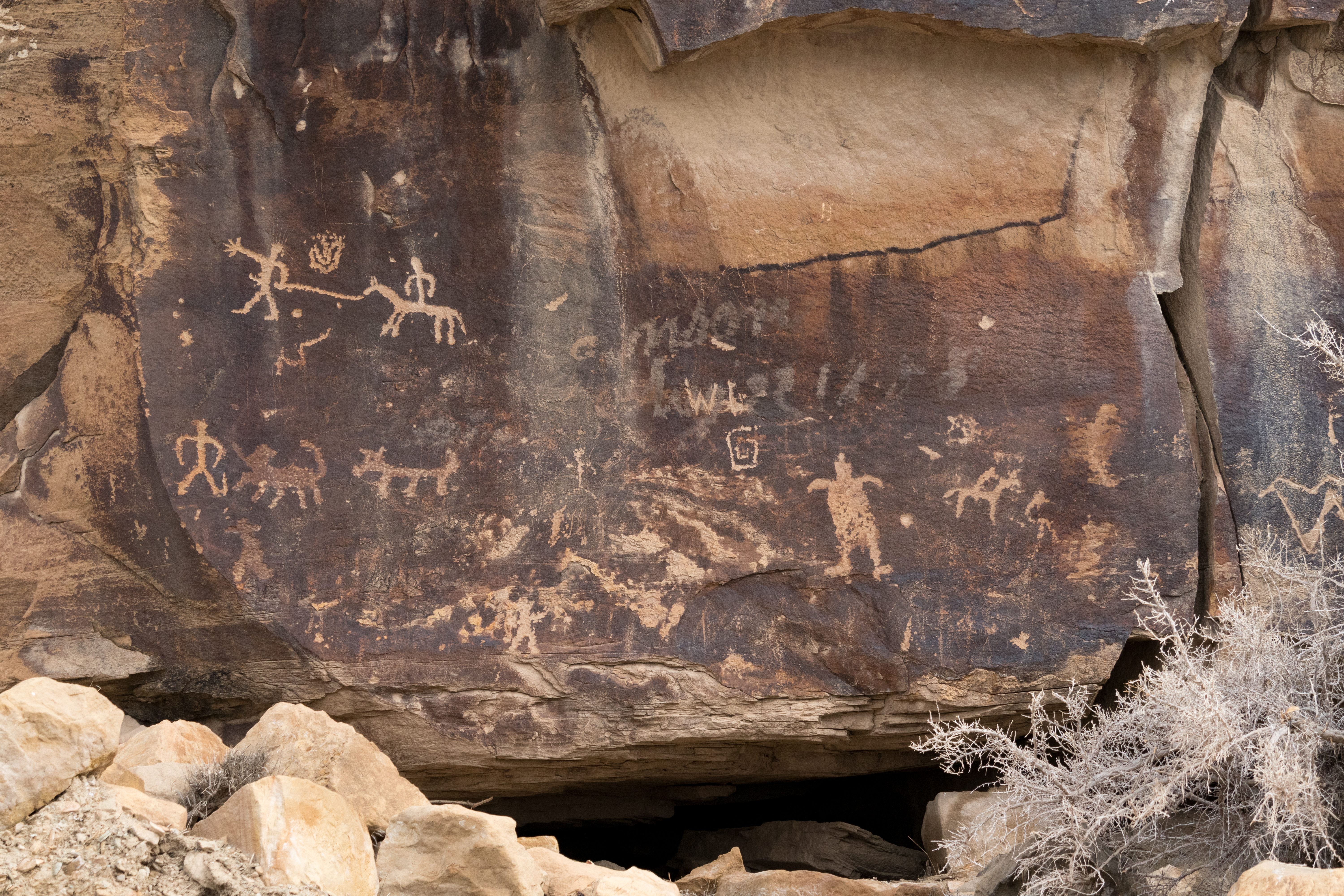
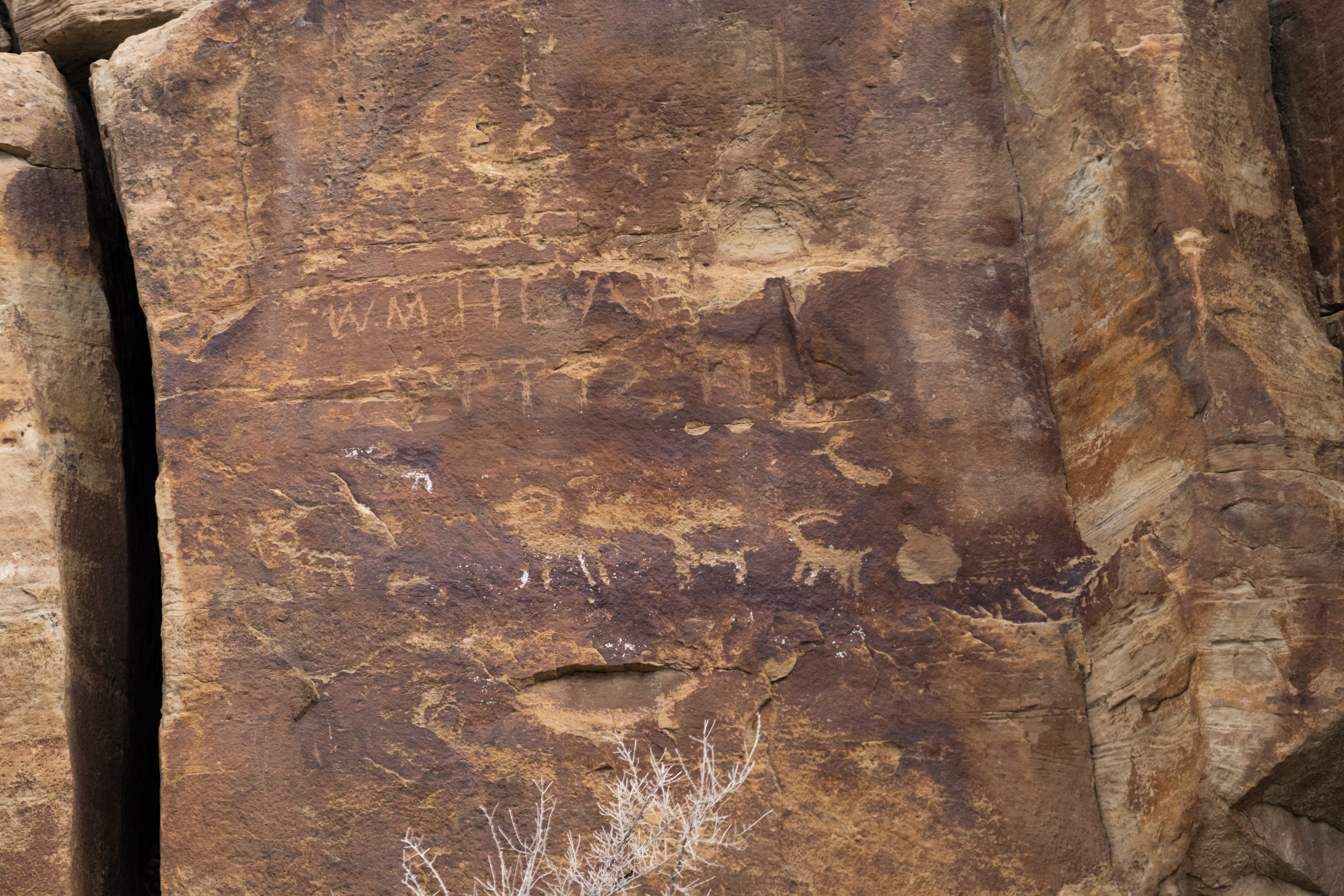
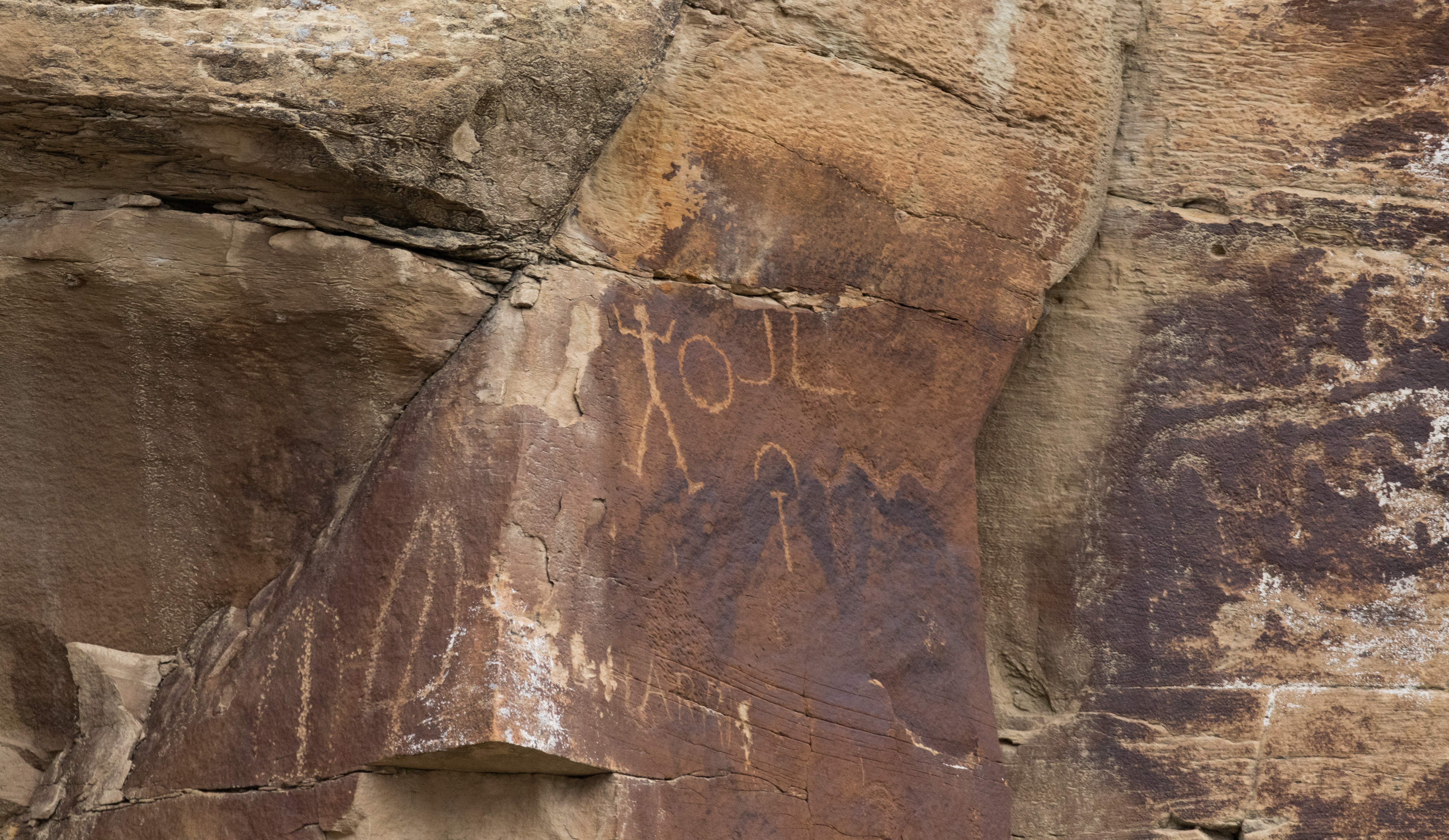
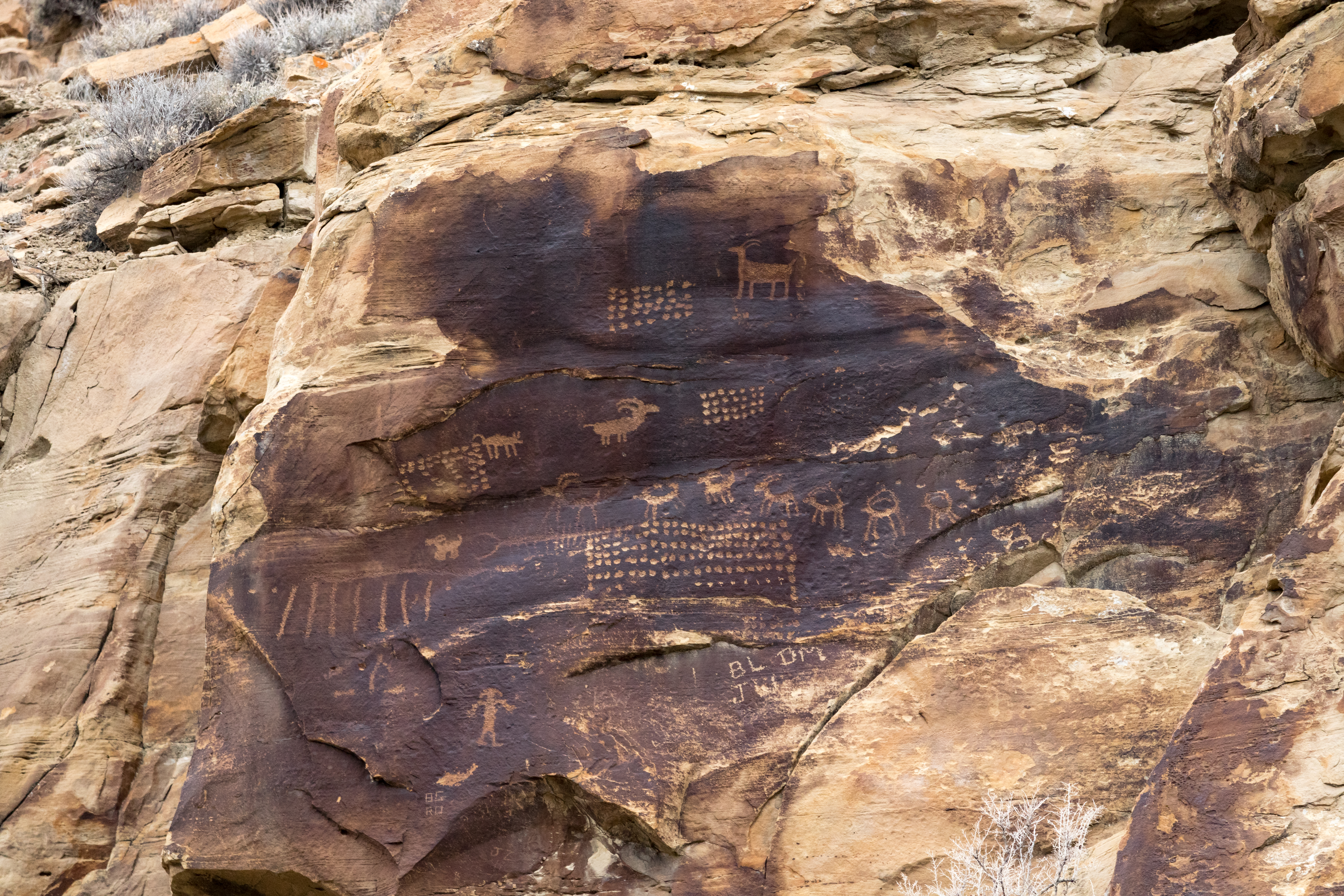
The rock art photos shown throughout this post were taken by me during the Spring of 2023 while traveling throughout Utah. I had hoped to provide high-quality images of the largest and most-known petroglyphs throughout Nine Mile Canyon.
Sources
- MATHENY, RAY T., et al. “Animal Ethology Reflected in the Rock Art of Nine Mile Canyon, Utah.” Journal of California and Great Basin Anthropology, vol. 19, no. 1, 1997, pp. 70–103. JSTOR, http://www.jstor.org/stable/27825626. Accessed 4 Apr. 2023.
- http://www.utahrockart2.org/pubs/proceedings/volumes/Proceedings_Utah_Rock_Art_Volume_25_26.pdf#page=48
- http://www.utahrockart2.org/pubs/proceedings/papers/2017-Patterson-The%20MukwitsiHopi_(Fremont)_Abandonment_and_Numic_Immigrants_into_Nine_Mile_Canyon_Rock_Art.pdf
- https://en.wikipedia.org/wiki/Ninemile_Canyon_(Utah)
- https://www.climb-utah.com/Misc/ninemile.htm
- https://en.wikipedia.org/wiki/Fremont_culture
- https://www.nps.gov/care/learn/historyculture/fremont.htm
- https://archive.library.nau.edu/digital/collection/hcpo/id/1248

2,079 hits
 Nick Gentile Photography
Awesome job here Nick!!
LikeLike